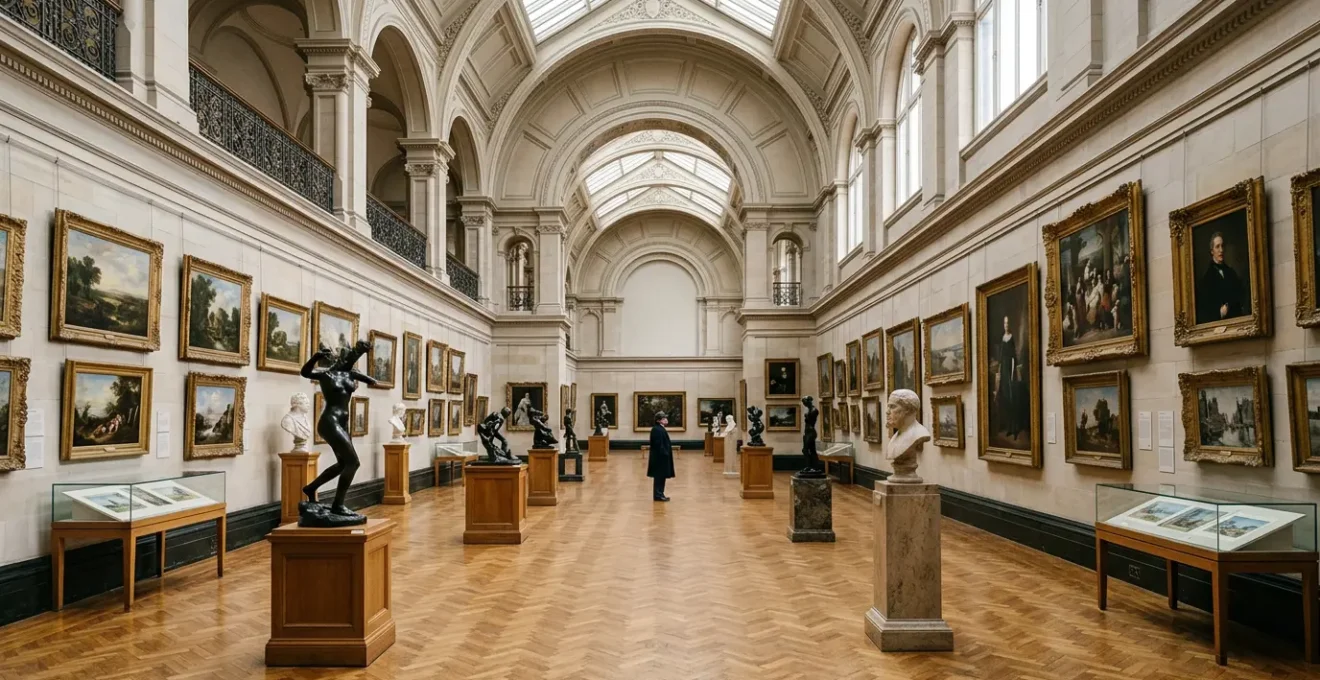
The long-term value of an artwork in the UK is determined less by its initial price and more by its material resilience to our uniquely damp and fluctuating climate.
- Works on paper are extremely vulnerable to humidity, while outdoor bronzes face accelerated corrosion from coastal air.
- Proper storage and framing are not aesthetic choices but critical conservation strategies to mitigate inevitable environmental risks.
Recommendation: Before acquiring any new piece, conduct a risk assessment of your home’s environment to ensure you can provide the specific conditions that medium requires to survive.
For the novice collector in the United Kingdom, the excitement of an acquisition is often followed by a quiet, creeping anxiety. The very climate that gives our landscapes their lush character—the persistent damp, the fluctuating temperatures, the salt-laden coastal air—is a relentless adversary to the longevity of fine art. Many collectors focus on provenance and artist reputation, believing these are the sole guardians of value. They are often told to simply “avoid sunlight” or “control humidity,” platitudes that are woefully inadequate in the face of our environmental reality.
But what if the most critical factor for preserving your investment isn’t the artist’s name, but the material science of the work itself? From a conservation perspective, the dialogue must shift from aesthetics to an understanding of physical and chemical stability. The true key to retaining value is not merely collecting, but becoming a steward—an informed custodian who can proactively mitigate the risks inherent in our climate. This is not about expensive restoration after the fact; it is about preventative conservation from day one.
This guide moves beyond generic advice. We will analyse the specific vulnerabilities of different mediums, from the hygroscopic nature of paper to the chemical reactions on bronze. By understanding why materials degrade in a UK setting, you can make informed decisions about what you collect, where you display it, and how you protect it for the decades to come.
This article provides a detailed, science-based examination of the risks associated with various art forms in the UK. The following sections will guide you through the critical considerations for preserving your collection.
Summary: A Conservator’s Guide to Preserving Art Value in the UK
- Why do works on paper require more stringent climate control than canvas?
- How to clean mixed-media pieces without dissolving the adhesive layers?
- Oil on Canvas or Digital Print: which carries less physical risk over 50 years?
- The placement mistake that fades watercolours by 40% in just two summers
- How to frame pastels to prevent dust accumulation and pigment loss?
- Why does bronze turn green faster in coastal UK locations?
- Basement vs Attic: which storage area carries higher risks in the UK climate?
- Installing Bronze Sculpture in English Gardens: Maintenance and Theft Prevention?
Why do works on paper require more stringent climate control than canvas?
From a material science perspective, the fundamental difference between paper and canvas lies in their hygroscopic nature. Paper, being a cellulose-based material, is exceptionally porous and acts like a sponge, readily absorbing and releasing moisture from the atmosphere. This makes it far more susceptible to the UK’s fluctuating relative humidity (RH). Each cycle of expansion and contraction as the paper absorbs and sheds moisture weakens its internal structure, leading to cockling, warping, and eventual embrittlement.
Canvas, while also a natural fibre, is typically sealed with layers of gesso and paint, creating a partial barrier to moisture. Paper’s vulnerability is primarily chemical. High humidity encourages mould growth, which can cause irreversible staining, while also accelerating acid hydrolysis—a process that breaks down cellulose fibres. Furthermore, conservation research shows that chemical deterioration processes double for every 10°C increase in temperature. In an uncontrolled UK home, summer heat combined with high humidity creates a perfect storm for rapid decay.
Therefore, works on paper demand a much narrower and more stable environmental band. International museum standards, such as those followed by the Smithsonian, recommend a stable environment of 30-50% relative humidity and a cool temperature. For a UK collector, this means that a work on paper cannot be treated as a simple wall hanging; it is an object that requires a managed micro-climate, often achieved through specialised framing and dedicated climate control, to prevent its premature degradation.
How to clean mixed-media pieces without dissolving the adhesive layers?
Cleaning mixed-media artwork is one of the most hazardous procedures a collector can contemplate, precisely because of the unpredictable nature of its composite materials. Unlike a uniform oil painting, a mixed-media piece may combine paper, fabric, plastics, and various found objects, all held together with an array of adhesives whose chemical compositions are often unknown. The primary risk is that a solvent or cleaning method safe for one element can be catastrophic for another, particularly the adhesive layers.
The first rule of conservation is to do no harm. For a mixed-media piece, this begins with a simple, non-invasive method: gentle dusting with a soft, natural-hair brush, carefully brushing debris towards a low-suction vacuum nozzle held several inches away. Never touch the surface with the vacuum. For any form of “wet” cleaning, professional expertise is non-negotiable. A conservator will perform patch testing on minuscule, inconspicuous areas to determine the solubility of each material and adhesive. They use a range of controlled solvents, from distilled water to specific alcohols and hydrocarbons, applied with pinpoint accuracy.
The image above illustrates this meticulous process. The goal is to find a solvent that removes the surface grime without affecting the underlying pigment or, crucially, without weakening or dissolving the adhesive bonds that hold the collage together. As the Eden House of Art Conservation Team notes, this requires a deep understanding of material chemistry. As they state:
The conservator must assess the unique challenges presented by the artwork’s materials and the environment in which it is displayed or stored
– Eden House of Art Conservation Team, What is Art Conservation? How to Conserve Your Investment
For the collector, the takeaway is clear: surface dusting is the limit of safe DIY intervention. Any further cleaning requires a professional assessment to avoid irreversible damage.
Oil on Canvas or Digital Print: which carries less physical risk over 50 years?
When assessing physical risk over a 50-year period in a typical UK home, the traditional medium of oil on canvas presents fewer uncertainties than a modern digital print. The conservation challenges of oil paintings are centuries-old and well-understood. The primary risks are physical—paint cracking due to canvas expansion and contraction, or the canvas itself slackening. While sensitive to extreme fluctuations in humidity, oil paintings have a proven track record of stability when kept in reasonably stable domestic conditions.
Digital prints, conversely, introduce a host of modern and less predictable vulnerabilities. The longevity of a print is entirely dependent on the quality of its three components: the ink (pigment vs. dye), the paper (archival vs. acidic), and the printer used. Even a high-quality giclée print on archival paper is extremely sensitive to its environment. Its primary enemy is light. While all art is vulnerable to UV damage, the dyes and pigments in digital prints are often more fugitive. According to conservation guidelines, paper-based works should have a maximum exposure of 100,000 lux hours per year, a budget that can be exhausted quickly in a brightly lit room.
Beyond environmental factors, the greatest risk for digital work is technological obsolescence. While the physical print might survive, its cultural and financial value is tied to a digital file. Over 50 years, file formats become unreadable, storage media degrades, and the ability to reprint or verify authenticity can be lost. An oil painting is a self-contained object; a digital print is merely the current output of a fragile technological ecosystem.
The following table provides a clear risk comparison based on an analysis of common conservation challenges:
| Risk Factor | Oil on Canvas | Digital Print |
|---|---|---|
| Physical Deterioration | Paint cracking, canvas slackening | Ink fading, paper brittleness |
| Environmental Sensitivity | Moderate (humidity, temperature) | High (UV light, humidity) |
| Technological Obsolescence | None | High (file formats, storage media) |
| Conservation Complexity | Well-established methods | Evolving techniques |
| Long-term Stability | Proven over centuries | Unknown beyond 50 years |
The placement mistake that fades watercolours by 40% in just two summers
The single most destructive and common mistake a collector can make with a watercolour is placing it in a location that receives direct sunlight. The seemingly gentle British sun, particularly during the longer days of summer, is a potent agent of destruction for the delicate pigments suspended in watercolour. The title’s claim of a 40% fade in two summers is not hyperbole; it is a realistic outcome for fugitive pigments exposed to cumulative UV radiation. This damage is irreversible and cumulative.
Unlike oil paints, where pigments are encapsulated in a protective binder of oil, watercolour pigments are more exposed on the paper’s surface. Many traditional pigments, especially in older works, are organic and highly “fugitive,” meaning they are not lightfast. Exposure to the UV component of sunlight triggers a photochemical reaction that breaks down the pigment molecules, causing colours to fade, shift, and, in some cases, disappear entirely. A vibrant blue sky can turn a dull grey; a crimson blush can vanish into the paper.
In the UK, a particularly insidious error is hanging a watercolour on a south-facing wall. Even if the sun only hits the artwork directly for an hour or two each day, the cumulative dose of UV and thermal energy is immense over a season. The solution requires a multi-layered approach to light management:
- Placement: Never hang a watercolour on a wall that receives any direct sunlight at any time of day or year. Choose north-facing walls or hallways with no windows.
- Glazing: Frame the work using conservation-grade UV-filtering glazing. This specialist glass or acrylic can block up to 99% of harmful UV rays, significantly slowing the fading process.
- Monitoring: Be aware of cumulative exposure. Even indirect daylight contributes to the annual “light budget.” For highly sensitive works, consider keeping them covered or stored for part of the year.
This proactive light management is the only way to preserve the subtle and luminous qualities that define the medium.
How to frame pastels to prevent dust accumulation and pigment loss?
Pastel is arguably the most fragile of all mediums. The image is composed of pure pigment, held together with a minimal amount of binder and loosely clinging to the surface of the paper. Unlike paint, it does not form a solid, durable film. The primary conservation challenges are twofold: protecting the surface from physical disruption that would dislodge the pigment, and preventing the accumulation of dust which is impossible to clean without damaging the artwork.
The frame is not merely a decorative border; it is the pastel’s primary housing and life-support system. A correct framing strategy creates a sealed, stable micro-environment. The key mistake to avoid is placing the glass directly against the artwork’s surface. This can cause pigment to transfer to the glass through pressure or static electricity, and any condensation that forms will be disastrous. Proper framing requires the use of spacers or a deep mount (mat) to create a crucial air gap between the pastel and the glazing.
Furthermore, the entire frame package must be sealed from the back. A professional framer will use a high-quality, acid-free backing board and then seal the join between the frame and the backing with conservation tape. This creates a closed system that prevents dust, thunderbugs, and other airborne pollutants from entering and settling on the pigment. The choice of glazing is also critical; while UV-filtering glass is important for light protection, some conservators recommend high-quality acrylic for pastels as it is less prone to generating static, which can lift pigment particles from the paper.
Essentially, framing a pastel is about creating a bespoke, miniature museum case. Every element, from the acid-free mount to the sealed backing, works in concert to protect the fragile, powdered surface from the external world. This is a task that should always be entrusted to a qualified conservation framer.
Why does bronze turn green faster in coastal UK locations?
The iconic green patina that forms on bronze is a result of oxidation, a natural chemical process. However, the rate and nature of this process are dramatically influenced by the surrounding environment. In coastal regions of the UK, the atmosphere contains two powerful accelerants: high humidity and airborne chlorides from sea spray. This combination is responsible for the significantly faster and often more damaging corrosion of outdoor bronze sculptures compared to those in inland locations.
Standard patination involves copper (the primary component of bronze) reacting with carbon dioxide and water to form a stable layer of copper carbonate, which is typically a deep green or blue-green. This stable patina can actually be protective, forming a barrier that slows further corrosion. However, the presence of chloride ions fundamentally changes this reaction. Chlorides act as a catalyst, promoting a more aggressive form of corrosion known as “bronze disease.”
This condition manifests as powdery, light-green spots on the surface. Unlike the stable patina, this is an active and cyclical corrosive process. The chloride reacts with the copper to form copper chloride, which then reacts with moisture in the air to produce hydrochloric acid, eating into the metal and releasing more chloride ions to continue the attack. It’s a self-perpetuating cycle of decay. UK heritage conservation studies indicate that coastal locations can experience a rate of patina development and corrosion that is three to five times faster than in a drier, inland urban environment. For a collector with a coastal property, this means an outdoor bronze sculpture is not a “place-and-forget” object but one that requires a rigorous and regular maintenance schedule to prevent aggressive chloride-induced corrosion from taking hold.
Basement vs Attic: which storage area carries higher risks in the UK climate?
When considering long-term art storage in a UK home, the common choices of basement or attic both present significant, albeit different, high-level risks. From a conservation standpoint, neither is ideal without significant modification, but the basement typically poses a greater and more insidious threat due to one pervasive factor: rising damp.
In the UK, particularly in older properties, basements are chronically prone to high relative humidity (RH), often sitting at 70-90%. This level of moisture is a primary catalyst for mould growth on paper and canvas, can accelerate chemical degradation, and encourages pest infestations like silverfish. Furthermore, basements carry a high risk of catastrophic water damage from seepage or flooding, which can mean total loss. While their temperature is often more stable than an attic’s, this stability in a high-humidity environment is a recipe for biological and chemical decay.
Attics, by contrast, suffer from extreme temperature fluctuations. In a poorly insulated UK loft, temperatures can range from below freezing in winter to over 50°C in summer. These rapid, wide-ranging cycles cause dangerous expansion and contraction in materials like wood and canvas. Winter attics are also prone to condensation. However, the air in an attic is generally drier, reducing the risk of mould. The primary water damage risk comes from roof leaks, which are often more contained than a full-scale basement flood. A comparative risk assessment by an environmental control specialist shows the distinct threat profiles.
The following table, based on data from UK humidity control experts, summarises the key risks:
| Risk Factor | Basement (UK) | Attic (UK) |
|---|---|---|
| Humidity Issues | Rising damp (70-90% RH common) | Condensation in winter |
| Temperature Range | Stable 10-15°C | Extreme: -5°C to +50°C |
| Water Damage Risk | High (flooding, seepage) | Moderate (roof leaks) |
| Pest Problems | Silverfish, mould | Birds, squirrels, wasps |
| Victorian/Edwardian Homes | Very high damp risk | Poor insulation |
Ultimately, for art storage, uncontrolled high humidity is a greater enemy than fluctuating temperature, making the typical UK basement the higher-risk location. Before using either space, a thorough environmental assessment is essential.
Your Action Plan: Environmental Audit for Potential Storage Areas
- Place digital hygrometers in both the attic and basement for a minimum of one full month, covering different weather patterns.
- Log the daily maximum and minimum readings for both temperature and relative humidity to understand the range of fluctuation.
- Conduct a thorough physical inspection for any signs of existing problems, such as water stains, peeling paint, or evidence of pest activity (droppings, nests).
- Assess the air circulation in each space. Is the air stagnant and musty (high risk) or is there some ventilation?
- Based on the data, identify the primary risk in each space (e.g., “Basement: RH consistently above 70%”; “Attic: Temperature swings of 20°C daily”) and determine if it can be mitigated.
Key Takeaways
- The UK’s damp, fluctuating climate is the primary adversary to art preservation; understanding material science is key.
- Preventative conservation, such as proper framing and environmental control, is far more effective and less costly than future restoration.
- Each medium has a unique vulnerability: paper to humidity, watercolours to light, and outdoor bronze to coastal air. There is no one-size-fits-all solution.
Installing Bronze Sculpture in English Gardens: Maintenance and Theft Prevention?
Placing a bronze sculpture in an English garden integrates art with nature, but it also exposes a valuable asset to two significant threats: environmental decay and criminal activity. Effective stewardship requires a dual approach that combines a rigorous maintenance schedule with robust security measures. Maintenance is a year-round commitment dictated by the seasons. In spring, the focus is on cleaning away winter pollutants and applying a protective layer of microcrystalline wax. This wax acts as a sacrificial barrier against moisture and pollutants.
Throughout the summer and autumn, regular inspection is key. This involves checking for damage from gardening activities and clearing away organic matter like fallen leaves, which can trap acidic moisture against the base of the sculpture. Winter checks are crucial for identifying areas where water might pool and freeze, potentially causing expansion cracks in the metal. The most important year-round task is monitoring for the powdery green spots of “bronze disease,” a sign of aggressive corrosion that requires immediate professional treatment.
Simultaneously, theft prevention cannot be an afterthought. The rising value of scrap metal has made garden sculptures a prime target. Security must be layered. This starts with physical anchoring; the sculpture should be professionally and securely fixed to a substantial concrete footing. Beyond this, as advised by art market specialists like MyArtBroker UK, a comprehensive strategy is vital. They recommend collectors “invest in security measures to protect your artwork from theft or damage,” which can include “installing alarm systems, surveillance cameras, and secure display cases.” For outdoor pieces, motion-activated lighting and discreetly placed cameras are effective deterrents. For particularly valuable works, registration with a database like the Art Loss Register is a critical step that aids in recovery and makes the piece harder for thieves to sell. Professional art storage firms, such as Anthony Ward Thomas in the UK, also provide options for when a work needs to be secured off-site.
By understanding the material science behind your collection and implementing a proactive strategy of preventative conservation, you transition from a mere owner to a true custodian. This informed approach is the most effective way to protect not only the physical integrity of your art but also its long-term cultural and financial value in the uniquely challenging British climate. To ensure your collection is truly secure, the next logical step is to commission a professional conservation assessment of your home environment and most valuable pieces.