Museums and exhibitions
The curation and management of museums and exhibitions represent a delicate intersection between cultural preservation, architectural psychology, and strategic business operations. Whether overseeing a sprawling national institution or launching an intimate commercial gallery, understanding the mechanics behind these spaces is fundamental. A successful exhibition does more than simply place objects in a room; it orchestrates an immersive journey that protects invaluable heritage while fostering profound visitor engagement.
This comprehensive resource deconstructs the foundational pillars of gallery management and exhibition design. From the intricate decisions surrounding artifact conservation and neurodivergent accessibility to the harsh realities of the commercial art market, the insights provided here will equip you with the practical knowledge required to navigate the modern cultural sector with confidence and expertise.
The Art Market and Collection Dynamics
Building and maintaining a compelling collection requires a keen understanding of market fluctuations and critical consensus. The valuation of artworks is rarely arbitrary; it is heavily influenced by historical significance, institutional backing, and shifting cultural narratives.
Identifying Authenticity and Movement Trends
Navigating the acquisition of movement-specific pieces demands rigorous due diligence. For instance, distinguishing the authentic, aggressive geometric lines of unsigned works from the Vorticist movement requires a deep understanding of early 20th-century British avant-garde techniques. Furthermore, collectors and curators must weigh long-term stability when comparing established eras, such as Post-War Modernism, against the volatile yet lucrative nature of the Young British Artists (YBAs). Investing in emerging ‘Neo-Movements’ before a solid critical consensus is established carries significant financial risk, making historical literacy a vital tool for any acquisitions director.
The Institutional Validation Effect
Institutional recognition plays a transformative role in an artist’s or a movement’s market value. Anticipating what industry insiders call the ‘Tate Britain effect’—where a major retrospective dramatically elevates public interest and auction prices—allows astute galleries to acquire works before they peak. Timing these acquisitions requires observing curatorial shifts in major national museums and understanding how public funding and academic research influence commercial demand.
Designing the Ultimate Visitor Experience
Exhibition design is much like composing a symphony; every spatial decision, lighting cue, and resting point dictates the emotional and physical rhythm of the visitor’s journey. Mastering spatial psychology is essential to preventing visitor fatigue and enhancing educational absorption.
Spatial Flow and the Psychology of Dwell Time
A common layout mistake in major exhibitions is creating frustrating bottlenecks around ‘star exhibits’. By strategically dispersing key pieces and using subtle lighting cues rather than aggressive signage, curators can guide visitors naturally, increasing visitor dwell time by up to 30%. Understanding audience demographics is equally crucial for spatial planning:
- Solo Scholars: Require isolated, quiet seating positioned at a distance to allow for extended, uninterrupted observation.
- Families: Benefit from clustered, robust seating near interactive or educational touchpoints.
- The Final Third Rush: Visitors often accelerate through the final rooms due to cognitive overload. Pacing the exhibition’s density and introducing distinct visual shifts can re-engage wandering attention.
Mental Health and Emotional Pacing
Art has a profound capacity to provoke introspection, and gallery design can actively improve mental well-being. Incorporating spaces for ‘slow looking’ in busy city museums allows patrons to decompress. Interestingly, viewing natural fractal patterns in certain artworks has been scientifically shown to reduce cortisol levels in stressed visitors. However, when curating trauma-based art, pacing emotional content is critical. Displaying distressing material without adequate warning is a severe curation error; introducing a designated ‘reflection point’ allows visitors to process heavy emotional weight safely.
Pioneering Accessibility in Gallery Spaces
True cultural enrichment must be accessible to everyone. Modern museums are moving beyond basic physical access to embrace comprehensive cognitive and sensory inclusivity, ensuring that diverse audiences can engage meaningfully with the collections.
Designing for Neurodiversity
Making exhibitions accessible for neurodivergent audiences requires meticulous attention to the sensory environment. Unpredictable noises and intense lighting can turn a joyful visit into an overwhelming ordeal. Implementing effective adjustments involves:
- Sensory Mapping: Providing clear maps indicating the locations of loud amenities, such as hand dryers, which is vital for visitors with autism to navigate safely.
- Visual Stories: Creating pre-arrival guides that use plain text and images to explain the social and environmental expectations of the space, drastically reducing anticipatory anxiety.
- Quiet Hours: Managing dedicated low-sensory events by dimming lights and silencing interactives, creating a calm atmosphere without compromising the artwork’s integrity.
Navigational Aids and Sensory Adjustments
Interpretation materials must serve a broad spectrum of needs. While Easy Read guides offer simplified text supported by imagery for cognitive accessibility, rich Audio Descriptions are indispensable for visually impaired guests. Furthermore, lighting mistakes—such as using high-glare spotlights or rapidly flickering installations—can make galleries unbearable for light-sensitive visitors. Subtle, diffused illumination protects both the artifact and the patron.
Safeguarding Heritage: Conservation and Display
The primary mandate of any museum is the preservation of history. This duty encompasses not only the daily physical protection of artifacts through specialized display mechanics but also robust disaster response planning and structural maintenance.
Advanced Mounting and Artifact Protection
Displaying ancient or fragile items requires precision engineering to prevent both environmental degradation and theft. Security and preservation must act in tandem:
- Material Compatibility: Using the wrong synthetic foam in storage can off-gas and actively degrade bronze artifacts over time. Materials must be rigorously tested for chemical inertness.
- Mount Making: Bending bespoke brass mounts ensures the object is securely supported during seismic activity without visually obscuring its details.
- Security vs Safety: While alarmed cases prevent ‘snatch and grab’ thefts, physical weighted mounts are equally necessary. Additionally, clamping errors on ceramics can lead to catastrophic cracking when ambient gallery temperatures fluctuate.
Disaster Response and Historic Preservation
For small museums, particularly those housed in Listed Buildings, disaster response planning is non-negotiable. Decisions on what to save must be established long before a fire starts. During a crisis, the removal order—balancing extreme monetary value, structural fragility, and proximity to the exit—must be strictly defined. In the UK climate, deciding between basement storage (prone to flooding) and attic storage (prone to heat and roof leaks) dictates how sodden archives must be immediately packed for the freezer to halt destructive mould growth.
When maintaining the buildings themselves, securing funding from bodies like the National Lottery Heritage Fund often requires proving robust community engagement. Structural alterations demand strict adherence to heritage guidelines; for instance, using Traditional Lime instead of Modern Cement is heavily enforced by Historic England, and planning errors on Grade I buildings can lead to severe legal repercussions.
The Commercial Gallery Landscape
Operating a commercial art space requires balancing artistic vision with rigorous business acumen. The structural choices a gallery makes in its infancy dictate its long-term survival in a notoriously competitive sector.
Strategic Positioning and Art Fairs
Choosing between a permanent space and a pop-up strategy shapes the entire business model. Crippling business rates in affluent areas like Mayfair frequently cause new galleries to fold within their first year. To offset physical overheads, galleries rely heavily on art fairs. Deciding whether to invest in the international prestige of Frieze or the robust domestic market of the London Art Fair dictates the quality of client leads generated. Furthermore, timing is everything: launching a flagship show must carefully avoid the notorious ‘August slump’ when major collectors are traditionally absent.
Client Conversion and Talent Management
Opening nights are excellent for building atmosphere, but the true measure of a gallery’s commercial success is converting opening night attendees into paying clients through diligent follow-ups and private viewings. Equally critical is talent retention. A common contract mistake among emerging galleries is failing to secure exclusivity clauses, allowing a star artist whose career they built to seamlessly jump to a larger, blue-chip gallery once critical acclaim is achieved. Structuring fair, mutually beneficial representation contracts is the bedrock of gallery stability.

Preserving Artistic Heritage: A Strategic Guide to Funding Restoration in Listed Buildings
Securing heritage funding relies less on the historical merit of your building and more on your ability to present a de-risked, quantifiable, and strategically aligned investment case to funders. Funders like the NLHF prioritise measurable outcomes such as skills transmission…
Lire la suite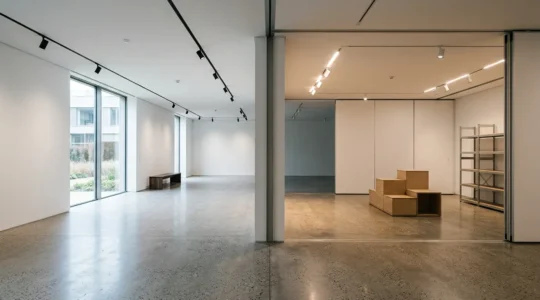
Art Gallery Business Models: Permanent Space vs Pop-Up Strategy?
The key to a successful gallery isn’t securing a prime Mayfair location, but mastering a phased, asset-light strategy to build revenue before committing to high overheads. The pop-up model should be used as a strategic ‘incubation’ phase to build a…
Lire la suite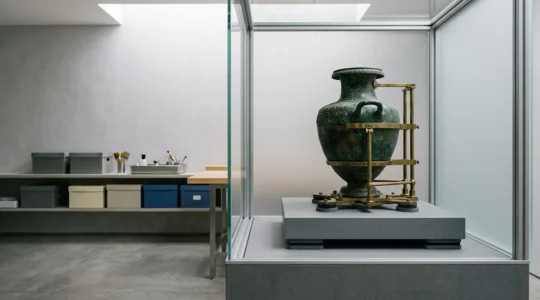
Displaying Ancient Artifacts: Engineering for Seismic and Security Threats
Effective artifact mounting is less about aesthetics and more about proactively engineering against unseen physical and chemical forces that cause irreversible damage. Material volatility, not just acidity, is the primary chemical threat to metal artifacts. Mismatched thermal expansion between a…
Lire la suite
Safeguarding History: A Disaster Response Plan for Small Museums
The survival of your collection during a disaster doesn’t depend on luck, but on a few critical decisions made in the calm before the crisis. Pre-defining salvage priorities is essential to overcome ‘decision paralysis’ during an emergency. An incomplete or…
Lire la suite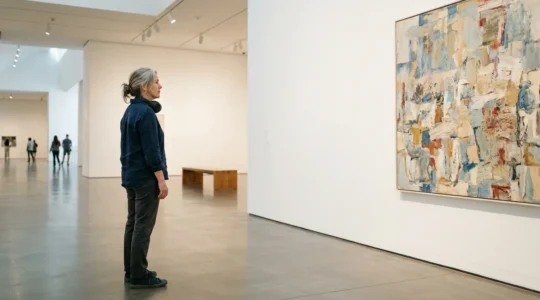
Beyond the Quiet Hour: How to Make Museums Truly Accessible for Neurodivergent Audiences
True neurodivergent accessibility in museums isn’t achieved by simply adding special events; it’s about fundamentally rethinking the sensory and cognitive experience of the space itself. Proactive management of sensory load (sound, light, crowds) is more effective than reactive quiet zones….
Lire la suite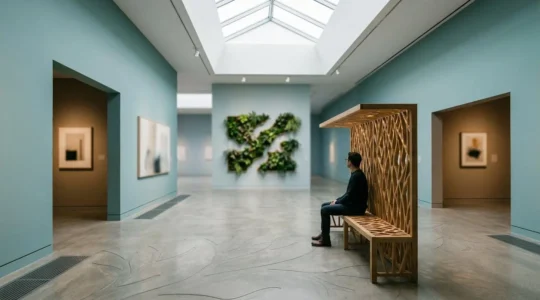
Art to Provoke Introspection: Can Gallery Design Improve Mental Health?
Exhibition design is no longer just about aesthetics; it is a powerful, evidence-based tool for actively regulating visitor mental and emotional states. Specific design choices, from colour palettes to spatial flow, directly impact physiological responses like heart rate and stress…
Lire la suite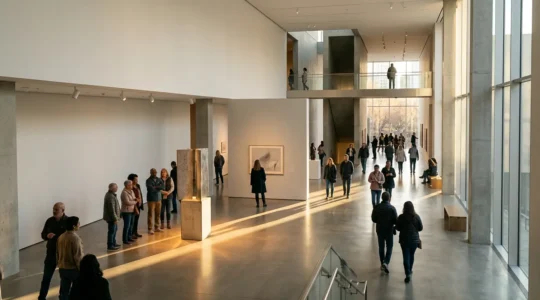
Designing the Cultural Experience: How to Increase Visitor Dwell Time by 30%?
Increasing visitor dwell time is not about adding more exhibits, but about mastering the invisible architecture of the visitor’s journey. Combat ‘cognitive load’ and decision fatigue with strategic pacing and low-stimulus ‘palate cleanser’ zones. Use theatrical lighting and ‘pressure and…
Lire la suite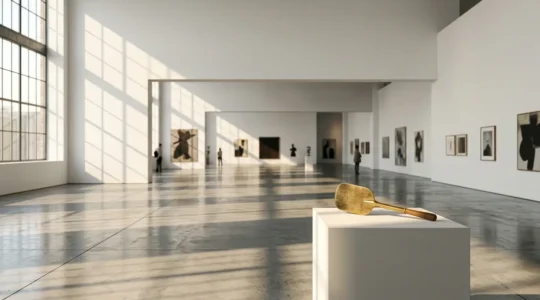
How Creative Movements Shape the Valuation of Modern British Art
The financial value of a British art movement is not random; it’s a predictable cycle driven by historical disruption, institutional validation, and scarcity. Authentic movements that break established norms (like Vorticism) create a « disruption premium » that underpins long-term value. An…
Lire la suite