Performing and performing arts
The performing arts industry relies on a delicate balance between unbridled creative vision and rigorous logistical execution. Whether staging a classical tragedy in a grand proscenium theater or hosting an immersive contemporary dance piece in a converted warehouse, the final performance is merely the tip of the iceberg. Behind every seamless transition, perfectly mixed audio cue, and emotionally resonant monologue lies a complex web of technical preparation, financial planning, and biomechanical training.
Understanding the ecosystem of performing arts requires looking beyond the stage. It demands a working knowledge of acoustic engineering, international customs regulations, psychological directing techniques, and physical anatomy. This comprehensive overview explores the foundational pillars that uphold live entertainment, offering directors, performers, technicians, and producers the insights needed to navigate the modern theatrical landscape safely and sustainably.
Mastering Venue Management and Technical Production
Transforming a physical space into a compelling performance environment is a monumental task. The architecture of a venue dictates everything from the rigging of lights to the propagation of sound, often requiring innovative workarounds when standard theatrical infrastructure is absent.
Overcoming Historic Venue Constraints
Hosting live entertainment events in historic buildings or heritage sites presents an immediate clash between preservation restrictions and technical needs. For instance, you cannot simply drill into twelfth-century stonework to hang a heavy lighting rig. Production managers must utilize self-supporting truss structures and ground-supported trussing that do not compromise the building’s integrity. Power distribution is another frequent hurdle. When a venue’s standard 13-amp sockets are vastly insufficient for modern stage requirements, accurately calculating generator needs becomes crucial to prevent catastrophic mid-show power failures. Proper scheduling of the load-in is equally vital; moving flight cases and heavy equipment must be timed precisely to avoid disrupting public opening hours or causing noise abatement issues with the local council.
Optimizing Acoustics and Sound Design
Every performance space possesses a unique acoustic signature. Mixing live sound for a theater differs entirely from mixing in a highly reverberant cathedral, where the acoustic environment is notoriously difficult to control. In converted industrial spaces, such as warehouses, unmitigated hard surfaces often result in extreme three-second reverberation times. To eliminate acoustic dead zones and slap-back echoes, technicians must deploy specific acoustic treatments:
- Absorbers: Soft, porous panels used to soak up high and mid-frequency sound waves, reducing overall reverberation.
- Diffusers: Irregularly shaped panels designed to scatter sound waves in multiple directions, maintaining the room’s live feel while eliminating direct echoes.
- Bass Traps: Specialized low-frequency absorbers placed in room corners, which must be constructed using fire-retardant materials to meet stringent safety regulations.
Stage Lighting and Sustainable Upgrades
The transition from traditional halogen fixtures to modern LED rigs is transforming theatrical lighting. While the upfront costs are significant, calculating the return on investment often reveals that an LED upgrade pays for itself relatively quickly through massive reductions in energy consumption and HVAC load. However, technicians must be wary of generic, low-cost fixtures. A common mistake is ignoring the Color Rendering Index (CRI); cheap LED wash lights with a low CRI can make actors’ skin tones appear unnaturally green. Furthermore, programming modern LED fixtures to replicate the warm, gradual dimming curve of traditional tungsten requires sophisticated console management and high-quality dimming engines.
Navigating the Business of Live Performances
Artistic brilliance cannot survive without financial viability. The business of live performance involves intricate budgeting, aggressive fundraising, and navigating complex bureaucratic landscapes to keep productions afloat and touring routes open.
Budgeting and Financial Planning
Creating a realistic budget is the backbone of any stage production, though the scale varies wildly between West End commercial runs and Fringe festival entries. A pricing mistake, such as underestimating weekly operating costs, can leave a producer with a sold-out house but zero net profit. To safeguard a production, producers should follow a strict financial structure:
- Establish baseline fixed costs, including venue hire, marketing, and essential insurance.
- Calculate variable costs, ensuring all performers are paid at least the standard industry minimums, even for Fringe shows.
- Build a genuine 10% contingency fund specifically earmarked for emergency scenarios, such as immediate cast replacements due to illness.
Securing Funding and Diversifying Revenue
With traditional public arts funding facing continuous cuts, symphony orchestras and theater companies must diversify their revenue streams. Relying solely on corporate sponsorship is increasingly volatile. Instead, cultivating individual giving circles often generates more stable, long-term income. Organizations are also monetizing livestream concerts to reach global audiences and launching endowment campaigns tied to major anniversary milestones to secure their financial future. For small live music venues, applying for specific grassroots funds and understanding the balance between wet sales (bar revenue) and ticket splits is what ultimately keeps the lights on in a 200-capacity room.
The Logistics of National and International Touring
Taking a production on the road involves immense logistical hurdles, particularly for philharmonic orchestras crossing international borders. Navigating customs requires meticulous documentation. Every single cable, instrument, and accessory must be listed on a carnet. Furthermore, obtaining CITES certificates is mandatory for transporting historical instruments or bows containing regulated materials like tortoiseshell or ivory. When deciding between air freight and road haulage for fragile equipment like double basses, tour managers must weigh the risks of atmospheric pressure changes against the physical vibrations of the road, while also factoring in stringent trucking scheduling regulations to avoid equipment impoundment.
Crafting Compelling Theatrical Experiences
The ultimate goal of all technical and financial preparation is to facilitate a profound connection between the performers and the audience. This requires deliberate directing choices, emotional pacing, and an understanding of physical storytelling.
Directing Techniques for Modern Audiences
Dramatic theater direction requires constant evolution to remain relevant, particularly when presenting classical texts like Shakespeare to younger demographics. Keeping the original historical setting can sometimes alienate viewers, prompting directors to rely on universal human dynamics rather than period-accurate staging. Using extreme proximity and sudden stillness within a large proscenium arch creates palpable tension. When coaching actors, directors often debate between methodologies: the Stanislavski system, which relies on emotional memory, versus the Meisner technique, which focuses on spontaneous, raw reactions to fellow actors. Pacing is also critical; a common direction error is poor scene transition timing, which can inadvertently turn a sharp two-hour play into an exhausting endurance test.
Immersive Theatre and Audience Connection
Immersive theatre dismantles the traditional fourth wall, placing the audience directly inside the narrative. This genre relies heavily on creating immediate psychological safety. The on-boarding phase is crucial; it teaches the audience the rules of the world and helps them suspend their disbelief. Directors must carefully manage the boundaries of consent, training performers to handle unpredictable audience members who refuse to follow the unspoken script. Deciding whether an audience member acts as a passive observer or an active protagonist dramatically alters their memory of the event and requires rigorous safeguarding protocols to protect performers in dark, unstructured spaces.
The Power of Physical Theatre and Non-Verbal Storytelling
Physical theatre demands that actors convey complex narratives without relying on text. Techniques pioneered by masters like Lecoq and Decroux offer different approaches—some suited for comic, exaggerated storytelling, others for highly articulated corporeal mime. To avoid the trap of over-acting, which reduces physical theatre to a mere game of charades, performers must learn to isolate specific body parts, such as the torso, to convey pure emotion. The precise chronological order in which the eyes, head, and body move is fundamental to signaling a genuine change in a character’s thought process.
The World of Professional Dance and Choreography
The realm of professional dance combines elite athletic performance with profound artistic expression. Dancers and choreographers face intense physical demands, complex collaborative processes, and unique legal challenges regarding intellectual property.
Training, Biomechanics, and Stamina
Contemporary dance training varies drastically depending on the chosen conservatoire. A Graham-based curriculum physically shapes a dancer differently than a Release-based program, focusing on deep pelvic contractions rather than momentum and gravity. Regardless of style, biomechanics dictate a dancer’s longevity. A critical training error is over-stretching to achieve extreme flexibility without building the necessary muscular strength to support the joints. Prioritizing correct jumping techniques and knee stability over forced turnout is essential for long-term joint health. Additionally, dancers must manage their nutrition carefully, ensuring adequate fuel for ten-hour rehearsal days to prevent bone density issues and utilizing active recovery techniques to maintain stamina.
Choreography, Collaboration, and Copyright
Creating an original dance piece often involves complex collaborations between choreographers and composers. A common friction point is rhythmic interpretation; the dancer’s traditional counts of eight do not always align with a classical composer’s time signatures. Building a timeline where music and movement evolve simultaneously requires intense communication. Once a piece is finalized, protecting that choreography becomes paramount. While a single, generic step like a plié cannot be copyrighted, a specific sequence of movements can. Creators increasingly use Labanotation or timestamped video evidence to prove ownership, protecting their work from unauthorized use in commercial media or digital video games.
Career Longevity and Post-Stage Transitions
The physical reality of professional dance means that stage careers are often shorter than in other arts. Career transition planning is a vital part of a dancer’s journey. The intense discipline, spatial awareness, and ability to process rapid feedback make former dancers exceptional project managers. Many leverage their deep anatomical knowledge to become osteopaths or Pilates instructors. However, the psychological trap of losing one’s primary identity as an artist upon retirement is profound. Knowing when to hang up the shoes—whether choosing to leave at the peak of one’s ability or dancing until physically forced to stop—is the most difficult decision a performer will make.
Sustaining Live Music and Orchestral Excellence
From the smallest subterranean jazz clubs to the grandest symphony halls, the live music sector requires relentless advocacy, acoustic mastery, and strategic community integration to thrive in the modern era.
Grassroots Music Venues and Urban Development
Small live music venues are the incubators for future stadium headliners, yet they face constant threats from rising business rates and urban gentrification. The Agent of Change principle is a vital planning policy designed to protect existing venues. It dictates that if property developers build residential flats next to an established music venue, the developers—not the venue—are responsible for funding the necessary soundproofing. Securing late-night operational licenses is also critical, as the profit margin in grassroots spaces often relies heavily on extended weekend bar revenue rather than ticket sales alone.
Recording Classical Music in Challenging Spaces
Capturing the harmonic resonance of a symphony orchestra or a string quartet is a highly specialized branch of audio engineering. The legendary Decca Tree configuration—a spaced array of three omnidirectional microphones—remains the gold standard for recording large orchestras, providing a spacious yet focused stereo image. When recording in challenging acoustics, such as washy cathedrals, engineers must strategically blend the main array with close spot microphones to add rhythmic definition without losing the natural reverberation. Choosing between the warm harmonic distortion of tube preamps and the pristine transparency of solid-state equipment fundamentally alters the emotional texture of the final recording.
Ultimately, the performing arts are a testament to human ingenuity and resilience. By mastering the technical intricacies of venue acoustics, implementing rigorous financial safety nets, understanding the biomechanics of the human body, and continuously adapting artistic direction for modern sensibilities, practitioners ensure that the magic of live performance remains a vital, enduring force in society.

Performer’s Stamina: Cardio Training for Musical Theatre Actors?
In summary: Nasal breathing during cardio is non-negotiable; it’s a physiological tool for superior oxygen efficiency. Cardio choice (running vs. swimming) must be evaluated based on its biomechanical impact on your primary discipline, not just its cardiovascular benefit. Structure high-intensity…
Lire la suite
Interpreting Rhythm Through Athletic Movement: Biomechanics for Dancers?
The long-term health of a dancer depends less on achieving extreme aesthetic lines and more on understanding and managing the body’s physiological load like a high-performance athlete. Jumping technique is paramount, as landing generates forces over seven times body weight,…
Lire la suite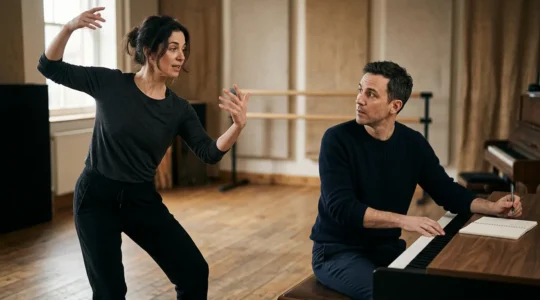
Choreographers and Composers: How to Collaborate on Original Scores?
True artistic fusion between choreographers and composers is built on tangible frameworks, not vague communication. Adopt agile « creative sprints » for simultaneous, iterative development of music and movement. Secure the work’s future by mastering Grand Rights and defining copyright from the…
Lire la suite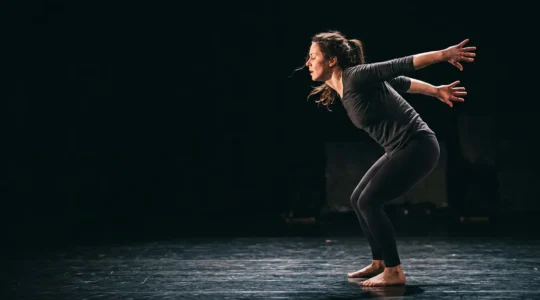
Narrating Without Words: The Unspoken Grammar of Physical Theatre
Physical theatre isn’t about miming actions; it’s about translating internal intent into a precise, physical grammar the audience can read. Core emotions originate in the torso and are often more telling than facial expressions. Authenticity comes from embodying a character’s…
Lire la suite
Life After the Stage: How Dancers Can Build a Fulfilling Second Career
The curtain call isn’t an ending; it’s the start of your second act, where your dancer’s DNA becomes your greatest professional asset. Your years of training have forged elite skills in project management, risk assessment, and kinesthetic intelligence that are…
Lire la suite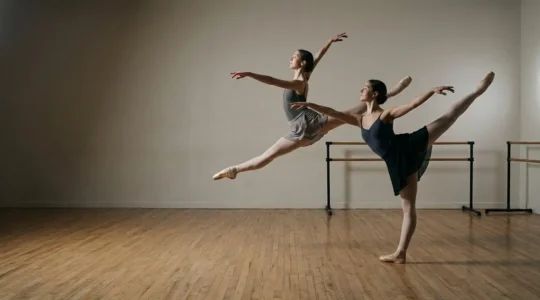
Protecting Choreography: A UK Creator’s Guide to Copyright and Monetisation
Your choreography is a valuable asset, but simply creating it is not enough to protect it from plagiarism or exploitation. Legal protection hinges on proving your work is an original, composed sequence that has been ‘fixed’ in a tangible form…
Lire la suite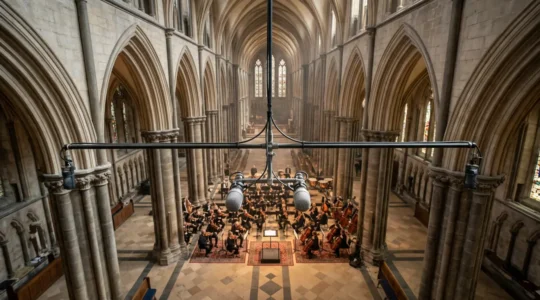
Capturing Harmonic Resonance: A Guide to Recording Classical Music in Challenging Acoustics
Recording classical music in sonically challenging spaces like cathedrals or warehouses often results in a « washy, » undefined sound, despite using standard microphone techniques. The solution lies not in fighting the room, but in a strategy of « acoustic triage. » This involves…
Lire la suite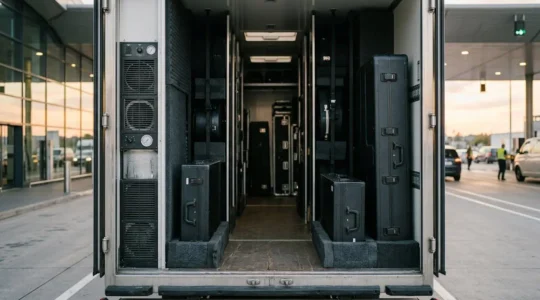
A Crisis-Proof Guide to Post-Brexit Orchestra Touring: Navigating Carnets, CITES, and Cabotage
Post-Brexit, the success of a European orchestra tour hinges not on whether you have an ATA Carnet, but on the granular precision of its General List and your grasp of non-obvious rules like cabotage. Critical failure points include incomplete equipment…
Lire la suite
Symphony Orchestra Funding: How to Diversify Revenue Streams Post-Arts Council Cuts?
The survival of UK orchestras post-subsidy cuts depends on a fundamental shift from chasing disparate funding to engineering a balanced, multi-pillar revenue portfolio. Individual giving circles and digital monetization provide stable, scalable income to offset volatile corporate or grant funding….
Lire la suite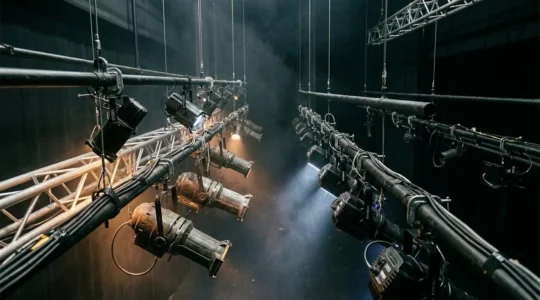
Calculating the Real ROI of an LED Theatre Lighting Upgrade
A full LED lighting rig upgrade can achieve a complete return on investment in under three years through drastically reduced operational costs. Energy and consumable savings alone can cut annual lighting expenses by over 70%. Success depends on avoiding cheap…
Lire la suite