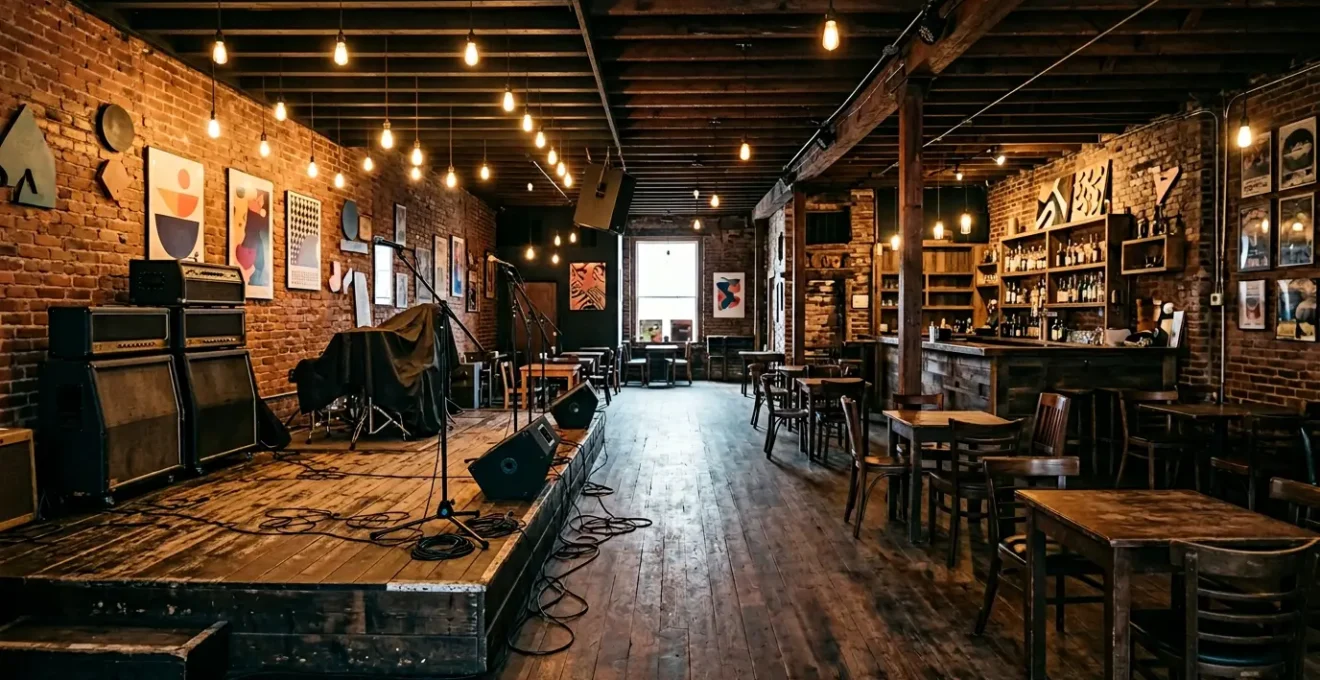
The existential threat to UK grassroots music venues is not a downturn in culture, but a crisis of structural fragility that can be actively fought and won.
- The sector’s near-zero profit margin proves that traditional revenue models like wet sales and ticket splits are no longer sufficient.
- Policies like the ‘Agent of Change’ principle and Arts Council grants are not passive lifelines, but strategic tools that must be aggressively wielded.
Recommendation: Shift from a mindset of passive survival to one of operational resilience by diversifying income through community models and proactively engaging in local planning battles.
As representatives of the Music Venue Trust, we live and breathe the fight for every grassroots music venue (GMV) in the country. We see the passion, the sweat, and the sheer love that keeps the lights on and the amps humming. We also see the existential dread in the eyes of owners staring at another business rates bill that makes a mockery of their cultural contribution. The narrative is often one of tragic decline, of a precious ecosystem crumbling under economic pressure. Platitudes about venues being the ‘lifeblood of music’ are offered as condolences.
But condolences don’t pay the rent. The hard truth is that while the public and even politicians lament the closures, the advice offered is often generic. We’re told to ‘innovate’ or ‘find new audiences’ as if these were simple toggles to flip. The problem isn’t a lack of passion or effort; it’s that the fundamental business and political environment is hostile to our existence. The conversation has to change. It’s time to stop mourning and start fighting with a clear, strategic playbook.
This is not another eulogy for the UK’s dying music scene. This is a battle plan. We will move beyond the ‘why’—we all know why our venues are essential—and focus on the ‘how’. How do we weaponize the policies designed to protect us? How do we build income sovereignty and break free from broken models? How do we turn the structural fragility of our sector into a source of defiant strength? This is about operational resilience, political engagement, and a refusal to go quietly into the night.
This guide breaks down the core challenges facing our venues and provides a strategic framework for action. From navigating funding applications to leveraging planning law and rethinking your entire business model, we will explore the tangible steps every venue owner and campaigner can take to secure their future.
Summary: A Strategic Playbook for the UK’s Grassroots Music Venues
- Why does the closure of small venues threaten the future of UK stadium headliners?
- How to apply for the ‘Grassroots Music Venues Fund’ successfully?
- Wet Sales vs Ticket Split: which model keeps the lights on in a 200-cap room?
- The ‘Agent of Change’ principle: does it actually stop developers building flats next door?
- When to apply for a 2am license to maximize weekend bar revenue?
- Why do individual giving circles generate more stable income than corporate sponsorship?
- Why do business rates in Mayfair kill 60% of new galleries in year one?
- Art Galleries Business Model: Permanent Space vs Pop-Up Strategy?
Why does the closure of small venues threaten the future of UK stadium headliners?
Let’s dismantle a dangerous myth: the idea that stadium-filling artists emerge fully formed from the ether. This is the ‘Pipeline Myth’. Superstars like Ed Sheeran, Coldplay, and Dua Lipa are not industry creations; they are the end product of a fragile and now-breaking ecosystem. That ecosystem is our network of grassroots music venues. Every sold-out arena show starts with a half-empty room, a dodgy PA system, and a handful of true believers. This is where artists learn their craft, build a following, and make the mistakes that shape their careers.
The numbers paint a terrifying picture of this pipeline’s collapse. Ed Sheeran, for example, played 366 shows in GMVs between 2006 and 2008. Of those vital stepping-stone venues, only 214 remain open today. This isn’t just a loss of nostalgia; it’s the destruction of the industry’s R&D department. Without these spaces, the next generation of headliners has nowhere to grow. A reality starkly highlighted by data from UK Music showing that 35% of the UK’s grassroots venues have closed in the last decade alone.
The closure of each venue is a tear in the fabric of our national culture. It means fewer opportunities for new artists, a homogenization of music as only the safest bets get backing, and a future where the UK’s global musical dominance becomes a memory. When a 100-capacity room in Stoke or Swansea closes, a potential future headliner at Wembley or The O2 is silenced before they’ve even sung a note. The threat isn’t abstract; it’s a direct assault on the future of British music, and we are the front line of its defence.
How to apply for the ‘Grassroots Music Venues Fund’ successfully?
Securing public funding can feel like navigating a bureaucratic maze, but it’s a critical part of building operational resilience. The Arts Council England’s ‘Supporting Grassroots Music’ fund is a vital lifeline, backed by £5 million in additional support from the government. However, passion alone won’t get your application over the line. You need a forensic, data-backed approach that speaks their language.
The key is to frame your venue not just as a place that hosts gigs, but as a hub of community and artist development. The Arts Council wants to see a return on investment, and that return is measured in sustainable careers, new audiences, and a strengthened local sector. Your application must tell a compelling story, backed by hard evidence. Who are the local artists you’ve nurtured? What community groups use your space? How does your project specifically help artists transition to the next stage of their careers?
Think of your application as a business plan for cultural impact. A vague request for funds to “keep the lights on” will fail. A detailed proposal to “fund a 12-month program developing five local artists, providing them with paid performance slots, mentorship from established musicians, and culminating in a showcase for industry professionals” is far more likely to succeed. Be specific, be ambitious, and demonstrate exactly how their money unlocks long-term viability, not just short-term survival.
Action Plan: Securing Your Arts Council Grant
- Initiate Application: All proposals must be submitted through Arts Council England’s official Grantium platform within the Project Grants framework.
- Define Scope: Request funding between £1,000 and £40,000, clearly outlining a project timeline that does not exceed three years.
- Articulate Artist Impact: Centre your application on how the funding will directly support artists in building sustainable, long-term careers in music.
- Demonstrate Sector Growth: Provide clear evidence and a data-backed plan showing how your project will cultivate new audiences and strengthen the wider grassroots music scene.
- Provide Concrete Proof: Include specific examples of local artists you have nurtured and community groups you have hosted to validate your venue’s cultural value.
Wet Sales vs Ticket Split: which model keeps the lights on in a 200-cap room?
For decades, the financial model of a grassroots venue has rested on a precarious two-legged stool: ticket sales and ‘wet’ sales (bar takings). The unspoken agreement was that the bar would subsidise the art. But that model is now fundamentally broken. Rising costs, changing consumer habits, and suppressed wages have squeezed margins to the point of absurdity. Relying on this traditional split is no longer a strategy; it’s a slow-motion surrender.
The scale of this structural fragility is staggering. Across our entire network, the numbers are a brutal indictment of the current system. In one recent year, the entire sector generated a gross profit of just £2.9 million across over 800 venues. That’s an average of less than £3,700 per venue for an entire year. Let that sink in. It is not a viable business model; it is a collective, passionate hobby on the brink of collapse. No amount of efficiency savings on the bar can fix a problem of this magnitude.
The debate over wet sales versus ticket splits becomes almost academic in this context. While a healthy bar is crucial for cash flow, it cannot be the sole pillar supporting your venue. The answer isn’t choosing one over the other, but recognising that both are insufficient. We must build a third and even a fourth leg for the stool. This means exploring memberships, local business levies, merchandise partnerships, and community fundraising. It’s about fundamentally rethinking what a venue’s revenue streams can be, moving beyond the transactional relationship with the gig-goer to a deeper, more invested community partnership.
The ‘Agent of Change’ principle: does it actually stop developers building flats next door?
The ‘Agent of Change’ principle is one of the most critical pieces of policy we can wield in our defence. In simple terms, it places the responsibility for soundproofing on the ‘agent of change’—usually, a developer building new residential properties next to a pre-existing venue. Before this was clarified in the National Planning Policy Framework (NPPF), the burden often fell on the venue to solve noise complaints from new residents, an impossible financial task. Now, as the government’s own guidance clarifies, developers are responsible for identifying and solving sound issues as a condition of planning permission.
However, having a principle on the books and making it work are two different things. As the industry body LIVE noted in evidence to Parliament, the principle still “needs more teeth.” It is not a magic shield. Developers and local authorities can ignore or misinterpret it. Our job is to make it impossible for them to do so. This is where we move from being victims of planning decisions to being active, informed, and aggressive participants in the process. We must weaponize this policy.
This means being proactive, not reactive. You cannot wait for the planning application to be posted on a lamp post. You must be prepared to fight. Your strategy should include:
- Proactive Documentation: Commission professional acoustic reports to establish your baseline noise levels *before* any development is proposed.
- Early Engagement: Build relationships with your local planning authority. Make them aware of your venue’s existence and cultural value long before a conflict arises.
- Community Mobilisation: Build a “war chest” of positive testimonials from your community, local businesses, and artists. Frame your venue as a cultural asset that enhances the area.
- Vigilant Monitoring: Regularly check your local council’s planning portal for any applications in your vicinity.
- Quoting Policy: In any objection, quote the exact wording of the NPPF regarding the Agent of Change principle. Show them you know the law.
When to apply for a 2am license to maximize weekend bar revenue?
The decision to apply for a later license—for instance, extending from a midnight or 1am close to 2am on weekends—is a classic risk-reward calculation for any venue owner. The potential reward is obvious: an extra hour or two of peak-time bar sales can significantly boost a weekend’s takings. In a game of razor-thin margins, that extra revenue can be the difference between breaking even and turning a small profit. It’s a direct lever to pull to increase your wet sales.
However, the risks and costs must be carefully weighed. A later license often comes with higher security costs (more door staff for longer), increased staff wages, and potentially more complex negotiations with local police and licensing authorities. The critical question is: will the projected increase in bar revenue outweigh these additional fixed costs? This requires a sober analysis of your audience’s behaviour. Do your crowds thin out after the main act, or do they stick around, eager for a late-night atmosphere?
This decision is made more acute by the ever-shifting landscape of government support. The tapering of financial relief, such as business rates support, puts even more pressure on venues to maximize their own generated income. The table below illustrates the stark reality of how support is being withdrawn, making every pound of self-generated revenue more critical.
| Year | Relief Rate | Impact |
|---|---|---|
| 2024/25 | 75% | Pandemic-era support |
| 2025/26 | 40% | £7m additional tax burden |
| 2026/27 | 15% additional | Plus bill freeze for 2 years |
As this support evaporates, the onus falls back on us. Applying for a 2am license, therefore, isn’t just a lifestyle choice for your venue; it’s a strategic response to a changing financial reality. If your data shows you can cover the costs and net a significant profit, it becomes a necessary tool for survival in a post-subsidy world.
Why do individual giving circles generate more stable income than corporate sponsorship?
For too long, the arts and culture sector has chased corporate sponsorship as a mark of success. While a big-name brand on a poster can feel validating, it creates a dangerous dependency. Corporate budgets are fickle; they are the first to be cut in a downturn, and their marketing objectives can change overnight, leaving you high and dry. This reliance on a few large, unstable sources of income is a core part of our sector’s structural fragility. True operational resilience—what we call Income Sovereignty—comes from diversifying and rooting your finances in your most loyal asset: your community.
This is where models like individual giving circles, memberships, and ‘patron’ schemes come in. Instead of seeking one £10,000 sponsorship, the goal is to find 200 people willing to contribute £5 a month. This model is inherently more stable. It’s spread across a wide base, making you resilient to any single supporter leaving. It’s also ‘stickier’; a community member invested in your venue’s survival is far less likely to cancel their support than a corporate marketing manager is to reallocate their budget. This income is also often unrestricted, allowing you to use it where it’s needed most, rather than being tied to a sponsor’s specific activation.
Building this model requires a shift in mindset. You are no longer just a venue selling tickets and beer; you are a community hub that people can join and invest in. This could be a “Friends of [Venue Name]” scheme offering priority booking, or a Community Interest Company (CIC) model where locals can become actual stakeholders. This approach transforms your audience from passive consumers into active participants in your survival. The stakes are high; with an estimated 12,000 jobs at risk in our sector, building these stable, community-owned financial foundations is a moral and economic imperative.
Why do business rates in Mayfair kill 60% of new galleries in year one?
While our fight is for music, we can and must learn from the struggles of our comrades in other cultural sectors. The plight of small art galleries, particularly in high-rent areas like London’s Mayfair, offers a chilling parallel to our own battle with business rates. The title of this section isn’t a hypothetical; it reflects a grim reality where property values, and the taxes based on them, are completely detached from the economic reality of the cultural organisations that occupy them. A space is valued on its potential as a luxury boutique, not its reality as a gallery or a music venue.
This is the core of the business rates crisis. The system taxes our venues based on a property’s hypothetical rental value, not our actual ability to pay. The 2017 revaluation, for instance, led to an average 31% increase in business rates for venues, a crippling blow that had nothing to do with increased ticket sales or bar takings. It was a tax on a value we could never hope to realise. It is an unjust and unsustainable system that actively penalises culture.
Mark Davyd, our CEO at Music Venue Trust, articulated the sheer insanity of this situation perfectly when new tax demands were created. He stated:
The immediate impact is to create a demand for £7 million in additional premises taxes from a sector that returned an entire gross profit across all 830 venues of just £2.9 million.
– Mark Davyd, Music Venue Trust CEO
This is the fight in a nutshell. Whether it’s a gallery in Mayfair or a music venue in Manchester, we are being taxed out of existence by a system that sees only real estate, not culture. Our campaign for a fundamental review and reform of business rates for cultural spaces is not special pleading; it is a demand for a fair system that recognises our unique value and our fragile economics. We must stand in solidarity with galleries, theatres, and all cultural spaces facing this existential threat.
Key Takeaways
- The financial model is broken: razor-thin margins prove that ticket and bar sales alone are no longer a viable strategy.
- Policy is a tool: The Agent of Change principle and funding grants aren’t just lifelines; they are tools that must be actively understood and wielded.
- Community is capital: Shifting towards models like giving circles and memberships creates a more resilient and stable income stream than volatile corporate deals.
Art Galleries Business Model: Permanent Space vs Pop-Up Strategy?
Faced with the crushing overheads of a permanent space, the art world has increasingly embraced a more agile and nomadic approach: the pop-up. This strategy, born of necessity, offers powerful lessons in operational resilience for grassroots music venues. A permanent lease is a huge financial commitment—rent, rates, utilities—that ticks over relentlessly, whether you’re hosting a sold-out show or it’s a quiet Tuesday night. The pop-up model flips this on its head, turning fixed costs into variable ones.
For music venues, this doesn’t have to mean giving up your permanent home. Instead, it can be a supplementary strategy for growth and survival. By co-promoting shows in non-traditional spaces or hiring community halls in different neighbourhoods, you can test new markets and build your brand without the risk of a second lease. It’s a way to maintain revenue streams and audience engagement, even during quiet periods or if you’re forced to temporarily close for renovations.
Adopting a pop-up mentality can be a powerful tool for survival and growth. A strategic pop-up plan for a GMV could involve:
- Market Testing: Use pop-ups in pub backrooms or community halls to gauge interest in a new neighbourhood before considering a permanent expansion.
- Brand Building: Build your brand and audience through a series of successful events without the immediate burden of permanent overheads.
- Audience Development: Take your brand of curation to new areas, reaching audiences who might not travel to your main venue.
- Financial Agility: Generate a track record of successful, profitable events that can be used to secure funding or investment for a permanent space in the future.
The loss of over a hundred venues in 2023 alone is a brutal reminder that we cannot afford to be static. Embracing the agility of the pop-up model, learning from the art world’s fight for survival, is not an admission of defeat. It is a smart, strategic move to ensure our music and our communities continue to have a home, even if that home sometimes has to move.
The fight for our venues is a fight for the future of UK music. The strategies outlined here are not simple fixes; they require hard work, political engagement, and a collective will to survive. As the Music Venue Trust, we stand with every owner, every booker, every bartender, and every fan. Use this playbook. Adapt it. Share it. Let’s get to work.