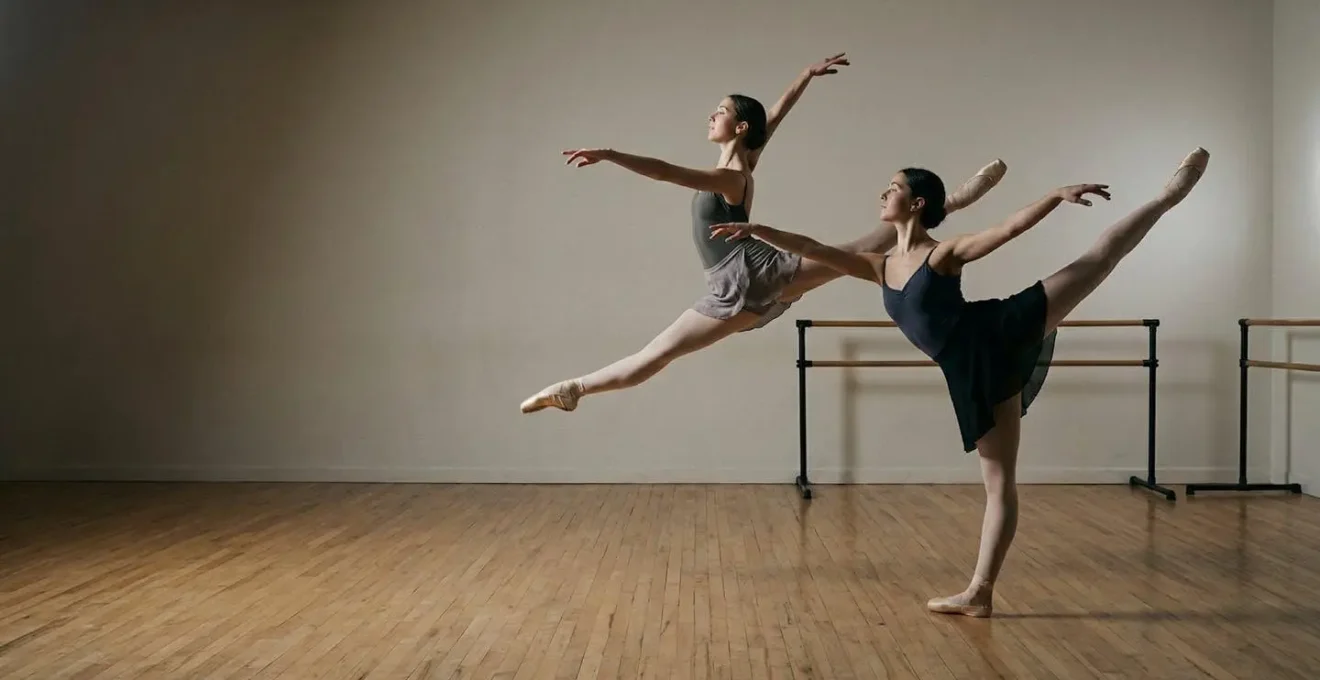
Your choreography is a valuable asset, but simply creating it is not enough to protect it from plagiarism or exploitation.
- Legal protection hinges on proving your work is an original, composed sequence that has been ‘fixed’ in a tangible form like video or notation.
- The structure of your contracts determines whether you receive a one-time fee or build a long-term passive income stream through licensing.
Recommendation: Proactively manage your work as intellectual property by documenting its creation, negotiating rights-retention contracts, and understanding its value across all media, from the stage to the screen.
There is a unique and painful frustration for a choreographer: seeing a sequence you laboured over—that specific turn of the head, the flick of a wrist, the rhythm of a foot-stomp combination—replicated on a global stage, in a film, or in a video game, with no credit and no compensation. It feels like a theft of your artistic DNA. Many creators in the UK know they should “get it in writing” or “record a rehearsal,” but this advice barely scratches the surface of true intellectual property protection. This passive approach often leaves artists powerless when their work is appropriated.
The common wisdom suggests that copyrighting a dance is a nebulous and difficult process. While UK law, specifically the Copyright, Designs and Patents Act 1988, protects choreography as a ‘dramatic work’, the practical steps to enforce those rights can feel unclear. But if the real key wasn’t just about following local statutes, but about learning from the high-stakes battles fought elsewhere? The fundamental principles of proving originality, documenting creation, and structuring commercial agreements are universal. For a UK-based creator, understanding the strategic playbook emerging from major US legal cases provides a powerful framework for protecting and monetising your work long before a dispute arises.
This guide will move beyond legal theory and provide a clear, protective strategy. We will dissect what makes a sequence legally protectable, how to build an undeniable body of evidence of your ownership, and how to structure contracts that secure both your artistic credit and your financial future. It’s time to stop being a creator for hire and start acting as the owner of a valuable intellectual property portfolio.
This article provides a detailed breakdown of the essential legal and strategic considerations for any dance creator. The following sections will guide you through the critical steps of protecting your intellectual property, from the fundamentals of originality to the nuances of contract law and future-proofing your art.
Summary: A Choreographer’s Legal and Strategic Toolkit
- Why is a specific sequence protected but a ‘plié’ is not?
- How to use Labanotation or video evidence to prove ownership of a dance?
- Exclusive Rights vs One-Time Performance: which contract creates better passive income?
- The ‘Fortnite Emote’ risk: can you stop video games using your moves?
- How to ensure your name stays on the poster for future revivals?
- Why does paying the invoice not give you the right to edit the photos?
- Copyright Assignment vs License: which protects your future income stream?
- Digital Artists and Tax: How Does HMRC Treat Crypto Art Earnings?
Why is a specific sequence protected but a ‘plié’ is not?
The foundational principle of choreography copyright rests on the distinction between an idea and its expression. A single dance step, like a plié or a pirouette, is considered a building block of the dance vocabulary—an unprotectable ‘idea’ or a “commonplace” movement. It is part of the public domain, free for all to use. Copyright protection begins when a creator arranges these building blocks, along with other movements, into a sufficiently original and expressive sequence. This is the ‘expression’.
The key is compositional originality. The law is not looking for novelty or athletic skill; it is looking for the creative choices you made in selecting, coordinating, and arranging movements and patterns to create a coherent whole. A simple routine of a few steps is unlikely to meet this standard. For instance, guidance from the U.S. Copyright Office states that short routines with only a few movements are not registrable. The work must be a unified composition that communicates a story, theme, or emotion.
To determine if your work crosses this threshold, consider the following elements. Is the sequence more than just a functional or social step? Does it reflect your unique creative authorship in its structure and phrasing? This is the core of your protectable asset.
- Coherent Whole: Does your sequence consist of multiple movements arranged into a unified composition, not just isolated steps?
- Expressive Intent: Does the sequence express an idea, emotion, theme, or narrative beyond purely functional or athletic movement?
- Creative Choices: Does your arrangement result from independent creative decisions in selection, coordination, and sequencing of movements?
- Distinction: Is your work distinct from widely-known social dances (like ballroom or line dances) and commonplace movements?
- Sufficient Complexity: Does the work contain enough creative material to be distinguished from a simple routine?
How to use Labanotation or video evidence to prove ownership of a dance?
In both the UK and US, for copyright to exist, a work must be ‘fixed’ in a tangible medium. For choreography, this means you must move it from a concept in your mind to a permanent, reproducible record. This act of fixation is not a mere formality; it is the cornerstone of your evidence. Without it, proving you created a specific sequence at a specific time becomes a nearly impossible task. Your goal should be to create a robust evidentiary package that leaves no room for doubt.
As the image above illustrates, one of the most historically significant methods of fixation is dance notation, such as Labanotation or Benesh Movement Notation. These systems are the equivalent of a musical score for dance, capturing movement, timing, and dynamics with precision. However, video is the most common and accessible method today. A clear, well-lit video recording of the full work, performed consistently, serves as powerful proof. It is wise to include a title card with the work’s name, your name as choreographer, and the date of recording.
The strongest approach combines multiple methods. A landmark example is the work of JaQuel Knight, who became the first commercial choreographer to successfully copyright his moves for Beyoncé’s “Single Ladies”. His case demonstrated the power of a multi-faceted approach. By combining Labanotation with the final music video and studio reference footage, he created an undeniable record of his authorship. This strategy provides layers of proof: the notation provides a detailed architectural blueprint, while the video captures the performance, style, and intent of the work.
Case Study: JaQuel Knight’s ‘Single Ladies’ Copyright Registration
JaQuel Knight became the first commercial pop music choreographer to successfully copyright his work by partnering with the Dance Notation Bureau to translate his ‘Single Ladies’ choreography into Labanotation. On July 9, 2020, he received approved copyright registration. The case demonstrated that combining multiple fixation methods—Labanotation, the final music video, and studio reference footage—creates the strongest evidentiary foundation for copyright claims, setting a precedent for commercial dance creators.
Exclusive Rights vs One-Time Performance: which contract creates better passive income?
Once you have an original, fixed work, its commercial value is realised through contracts. The type of agreement you sign is the single most important factor in determining your long-term income. Many choreographers, especially early in their careers, accept a one-time “buyout” fee. This is often a mistake, as it typically involves assigning your copyright, permanently selling off your most valuable asset for a single payment. The smarter, more sustainable strategy is to license your work, not sell it.
A license is essentially a rental agreement for your intellectual property. You retain ownership of the copyright and grant a third party specific, limited rights to use your work in exchange for payment. This payment can be structured in many ways, but royalty-based models are the key to passive income. As an IP lawyer, I often see the most financially successful choreographers build their careers on non-exclusive licenses, allowing them to earn revenue from multiple productions of the same work simultaneously.
The following table, based on common industry structures, illustrates the potential financial outcomes of different contract types. A non-exclusive model, while having a lower upfront fee, can generate significantly more revenue over time if the work is successful. This is the fundamental difference between working for a fee and owning an asset that works for you.
| Contract Type | Upfront Payment | Ongoing Royalties | Control Retained | 10-Year Revenue Projection | Best For |
|---|---|---|---|---|---|
| Exclusive Buyout | $10,000 | None | None (full assignment) | $10,000 (one-time) | Life-changing sum needed immediately; work integral to client brand |
| Exclusive License (5-year term) | $5,000 | 2% of NAGWBOR | Reversion after term | $15,000-$25,000 (estimated) | Major productions with defined territorial/temporal scope |
| Non-Exclusive Multi-License | $2,000 per license | 5% of ticket sales per licensee | Full ownership retained | $30,000-$60,000 (3-5 licensees) | Maximizing passive income across multiple markets/mediums |
| Advance Against Royalties | $3,000 advance | 7% after recoupment | Full ownership retained | $25,000-$50,000 (if work successful) | Balancing immediate income with long-term upside |
The language of your contract is your primary weapon. A well-drafted clause can be the difference between a single payday and a decade of royalties. For example, a standard royalty clause might state:
The choreographer will receive a fee of $5,000 for the creation of the choreographic work, plus 5% of gross ticket sales for each performance.
– Sample choreography contract clause, Center for Art Law – Typical Clauses in Choreography Contracts
The ‘Fortnite Emote’ risk: can you stop video games using your moves?
The explosion of video games like Fortnite, where players can purchase short dance moves (’emotes’) for their avatars, has created a billion-dollar market and a new frontier for copyright infringement. For years, game developers operated in a grey area, arguing that these short sequences were not substantial enough to warrant copyright protection. However, a recent landmark case has shifted the landscape in favour of choreographers, establishing that even a few seconds of movement can be protected if it is original and forms part of a larger, registered work.
The pivotal case is Hanagami v. Epic Games. Choreographer Kyle Hanagami sued Epic Games for using a distinctive part of his copyrighted choreography in a Fortnite emote. Initially, a lower court dismissed his claim, but the U.S. Ninth Circuit Court of Appeals reversed that decision. The court’s ruling was crucial: it rejected the idea that you could simply break down a dance into its individual “poses” to find it unoriginal. Instead, it affirmed that choreography must be viewed as a whole—the flow of movement, the creative choices, and the sequence all contribute to its originality.
This case is a game-changer for UK creators. It establishes a powerful precedent that short but distinctive sequences are not free for the taking. The financial stakes are enormous; analysis submitted in legal proceedings has documented that emotes contribute to over $1 billion in Fortnite revenue, underscoring the value being extracted from choreographic works. While the case ultimately settled, it sends a clear message to the gaming industry: license it, or risk litigation.
Case Study: Hanagami v. Epic Games Reversal
Choreographer Kyle Hanagami challenged Epic Games after the company used his registered choreography as the ‘It’s Complicated’ emote in Fortnite. While the district court initially dismissed the case, arguing the moves were unprotectable ‘poses,’ the Ninth Circuit reversed in November 2023. It held that reducing choreography to static poses contradicts how courts analyze other art forms like music. The case, which settled in February 2024, established that short sequences within longer registered works can receive protection if they demonstrate sufficient compositional arrangement and creative expression.
How to ensure your name stays on the poster for future revivals?
Beyond financial compensation, copyright grants creators ‘moral rights’. In the UK and Europe, these are more strongly defined than in the US and include the right of paternity—the right to be identified as the author of your work. This is your right to credit. However, like economic rights, your moral rights are only as strong as your contract. Simply creating the work does not guarantee your name will appear on the poster or in the programme for a revival ten years from now.
To ensure your legacy and reputation are protected, you must negotiate specific, robust attribution clauses in your agreements. These clauses should go far beyond a vague “choreographer will receive credit.” They must precisely define where, how, and in what size your name will appear. A strong attribution clause acts as a perpetual safeguard for your artistic contribution, ensuring that as long as your work is being performed, your name is attached to it.
This is not an adversarial demand; it is standard professional practice encouraged by theatrical unions and guilds. Your contract should stipulate the exact wording, placement, and prominence of your credit across all forms of media, from print to digital. It should also include remedies for any breach of this clause, such as financial penalties or the right to have the performances stopped until the credit is corrected. Protecting your name is as important as protecting your wallet.
Your Attribution Rights Checklist: Key Contract Clauses
- Specify credit placement: Require choreographer credit in all marketing materials including posters, programs, digital advertisements, and press releases with defined prominence (e.g., font size no smaller than 75% of director credit).
- Define exact wording: Stipulate the precise attribution format such as ‘Original Choreography by [Your Name]’ or ‘Choreographed by [Your Name]’ to prevent ambiguous or diminished credit.
- Include consultation rights for revivals: Require the production to consult you (or your estate) on any substantive changes to the choreography in future productions, protecting artistic integrity.
- Territory and duration specifications: Clarify that attribution requirements extend to all licensed territories and touring productions, not just the original mounting.
- Establish remedies for breach: Define specific remedies if attribution is omitted, such as the right to withdraw performance rights or monetary damages for the failure to provide credit.
Why does paying the invoice not give you the right to edit the photos?
To understand copyright in choreography, a powerful analogy can be found in photography. Imagine a dance company hires a photographer to shoot production images. The company pays the photographer’s invoice in full. Does this mean the company now owns the photos and can edit them, sell them, or use them in any way they see fit? The answer is unequivocally no. This is a common and costly misunderstanding that applies directly to how choreographic commissions are treated.
By default, the creator of a work—the photographer or the choreographer—owns the copyright from the moment of creation. Paying an invoice only covers the service of creating the work and a limited license to use it as agreed. Without a written contract explicitly transferring ownership (an assignment), all you have purchased is a specific set of usage rights. You cannot, for example, take a photographer’s photo and apply a garish filter, just as a company cannot take your choreography and “re-stage” it with major changes without permission.
The only major exception is work created under a ‘work-for-hire’ doctrine, a specific legal status that is much narrower than most people believe. In the absence of a formal employment relationship, work-for-hire status only applies under specific conditions, requiring a written agreement for one of nine specific categories of work. For most freelance choreographers in the UK, the default is that you are the copyright owner. This is a position of power, but only if you understand and enforce it through clear contractual terms that define exactly what rights you are granting.
Key Takeaways
- Originality is in the sequence: Individual steps are free to use, but your unique arrangement and composition of them is a protectable asset.
- Fixation is non-negotiable proof: A clear video recording or written notation of your work is the primary evidence of your authorship and the date of creation.
- License, don’t sell: The path to sustainable income is through licensing your work with royalty clauses, not selling your copyright for a one-time buyout fee.
Copyright Assignment vs License: which protects your future income stream?
Every choreographer will eventually face a critical decision that defines their financial future: whether to assign their copyright or license it. An assignment is a permanent sale. You transfer your entire bundle of rights to a new owner in exchange for a lump-sum payment. A license, as we’ve discussed, is a temporary and limited permission to use the work. While a large, upfront buyout from an assignment can be tempting, it almost always means forfeiting all future income from that work.
From a strategic, wealth-building perspective, licensing is nearly always the superior choice for a successful work. It turns your choreography into an annuity—an asset that generates recurring revenue. You retain control, allowing you to license the work to different companies in different territories or for different media, from stage to film to digital. An assignment closes the book on future earnings, while licensing keeps it open.
There is, however, an important legal protection for creators who do choose to assign their rights. In the U.S., a provision in the Copyright Act allows creators or their heirs to terminate a transfer after a set period. This “termination right” is a powerful tool, as it means even a permanent sale might not be forever. Specifically, U.S. law allows the original author to reclaim copyright 35 years after an assignment under Section 203. While UK law differs, this principle underscores a global trend towards protecting creators from inequitable long-term contracts.
| Aspect | Copyright Assignment | Copyright License | Hybrid: Advance Against Royalties |
|---|---|---|---|
| Ownership Transfer | Complete and permanent (with 35-year termination right) | No transfer; licensor retains ownership | No transfer; licensor retains ownership |
| Creator Control | None after assignment | Defined by license scope (territory, duration, medium) | Defined by license; ongoing approval rights possible |
| Upfront Payment | High (life-changing buyout) | Moderate to low | Moderate (recoupable advance) |
| Ongoing Income | None | Royalties per use/performance | Royalties after advance recoupment |
| Future Derivative Works | Controlled by assignee | Retained by licensor unless specifically licensed | Retained by licensor |
| Best Strategic Use | Immediate capital need; retirement; integral to client brand | Maximizing long-term passive income; retaining creative control | Balancing immediate financial need with long-term upside |
Digital Artists and Tax: How Does HMRC Treat Crypto Art Earnings?
As choreography increasingly intersects with digital media, from video games to virtual performances, new questions about monetisation and taxation arise. The world of digital art, particularly crypto art and Non-Fungible Tokens (NFTs), offers a fascinating glimpse into a potential future for choreographic IP. While the market is volatile, an NFT can function as a new form of “fixation”—a digitally scarce, verifiable token that represents ownership or a license to a piece of choreography captured on video.
For a UK-based creator, this opens up novel revenue streams but also new tax considerations. How would Her Majesty’s Revenue and Customs (HMRC) treat earnings from the sale of a “choreography NFT”? While there is no specific guidance for “crypto-dance” yet, HMRC has established clear rules for crypto assets in general. It does not consider crypto assets to be currency or money. Instead, they are treated as property.
This means that if you were to sell an NFT of your work, the profit would likely be subject to Capital Gains Tax. You would need to calculate your “gain” by subtracting the cost of creating and minting the NFT from the sale price (in GBP at the time of the transaction). This is a complex area, and meticulous record-keeping of all costs and sale values is essential. As choreographers become digital artists, they must also become savvy financial managers, understanding that these new opportunities come with new compliance obligations.
The core principle remains the same: your choreography is an asset. Whether that asset is licensed for a stage performance or sold as a unique digital token, it has a value that must be managed, protected, and, ultimately, declared. Thinking about these future-facing issues now is part of a robust, long-term IP strategy.
By treating your choreography not just as an artistic expression but as a portfolio of valuable intellectual property assets, you shift from being a service provider to a business owner. The next logical step is to audit your existing and future works using these legal frameworks to build a robust and profitable IP strategy that protects you for the length of your career and beyond.