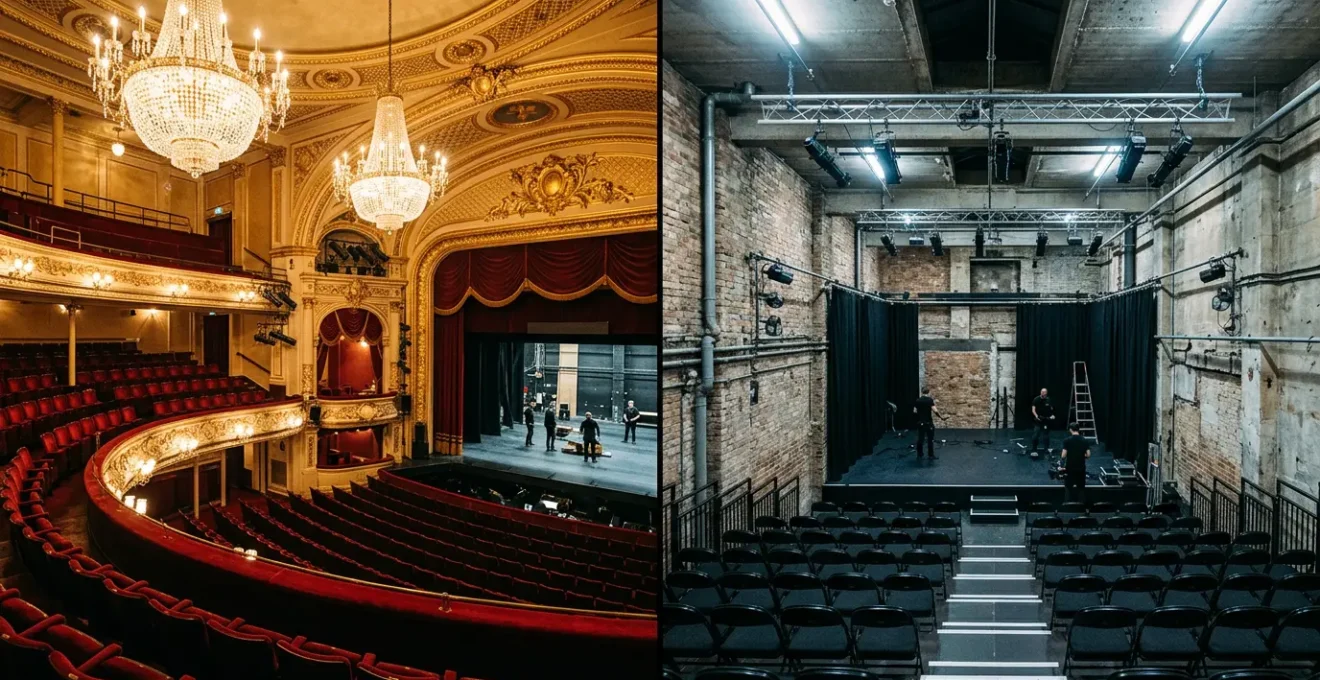
Effective theatre budgeting isn’t about saving money; it’s about strategically investing in your production’s specific definition of success, whether that’s profit, awards, or a future life.
- A budget is a strategic narrative of your values, risks, and goals, not just a list of expenses.
- Every line item, from actor pay to marketing, is an investment choice that must have a defined return.
- True contingency isn’t a flat 10% but a risk-weighted calculation based on your production’s unique failure points.
Recommendation: Approach your next budget not as an accountant, but as a general manager. For every cost, ask: “What specific, measurable return am I investing for?”
For any theatre producer, from the West End to a black box in Camden, the journey begins not with a script, but with a spreadsheet. That blank grid, with its infinite cells, represents both boundless possibility and terrifying risk. The common advice floods in immediately: track your expenses, build a buffer, and find cheap marketing. While not incorrect, this counsel barely scratches the surface. It treats budgeting as a simple accounting exercise, a matter of inputs and outputs.
This approach misses the fundamental truth of producing. A budget is more than numbers; it’s the financial embodiment of your artistic vision. It’s a strategic narrative that tells a story about what you value, where you are willing to take risks, and what success truly looks like for this specific project. It dictates whether you’re aiming for a sell-out commercial run or an artistically ambitious piece that builds careers and secures future commissions.
But what if the key wasn’t simply to account for every pound, but to treat every pound as a strategic investment? What if we moved beyond the platitude of a 10% contingency and learned to calculate risk like an insurer? This guide abandons the simplistic view of budgeting. Instead, we will deconstruct the critical financial decisions every London producer faces, framing them not as costs to be minimized, but as investments to be maximized for their specific, intended return—be it financial, reputational, or artistic.
This article provides a strategic framework for producers, breaking down the crucial financial pillars of a production. From foundational ethics to advanced risk management, the following sections will guide you in building a budget that is not just a plan for spending money, but a roadmap to success.
Summary: A Producer’s Strategic Guide to London Theatre Budgets
- Why Must You Pay at Least the ITC Minimum Even for a Fringe Show?
- How to Structure a Kickstarter Campaign to Fund Your Set Build?
- PR Agency vs Social Ads: Where Does £2,000 Go Further for a 3-Week Run?
- The Pricing Mistake That Leaves You With a Full House but No Profit
- How to Calculate a 10% Contingency That Actually Covers Emergency Cast Replacements?
- Why Charging by the Hour Penalizes Efficient Designers?
- Stage Play vs Screenplay: Which Format Suits Your Dialogue-Heavy Story Better?
- Structuring Dramatic Narratives: How to Write Plays That Get Commissioned?
Why Must You Pay at Least the ITC Minimum Even for a Fringe Show?
Let’s be unequivocally clear: paying your cast and crew is not a ‘cost’. It is the foundational investment in your production’s legitimacy, morale, and future. In the London theatre ecosystem, reputation is currency. Attempting to circumvent agreed-upon rates, even on the Fringe, signals to the entire industry that you are either ignorant of professional standards or willing to exploit artists. This is the fastest way to ensure talented actors, directors, and designers never work with you again.
The Independent Theatre Council (ITC) and Equity have established these minimums not just to ensure people can pay their rent, but to create a baseline of professional respect. For the 2024-25 season, that means budgeting for an ethical floor. As an example of scale, even on a small-scale tour, you are looking at an agreed-upon £572.25 weekly minimum for performers. While a profit-share model might seem tempting for a Fringe show with no upfront funding, it’s a high-risk approach. As one industry expert notes, “anything below Equity and ITC rates, while not illegal (unless it’s less than minimum wage) is considered bad practice.”
From a purely strategic perspective, paying fairly yields significant returns. It attracts a higher calibre of talent, ensures a more committed and focused company, and builds a professional reputation that will be invaluable when you seek public funding, private investment, or venue partnerships for your next show. Consider fair pay the first and most important chapter in your production’s strategic narrative—it states that you are a serious, professional entity worthy of investment and collaboration.
How to Structure a Kickstarter Campaign to Fund Your Set Build?
Crowdfunding is often misunderstood as simply asking for money. A savvy producer sees it as what it is: a pre-marketing campaign, an audience-building tool, and a way to de-risk a specific, tangible part of your budget. The set build is a perfect candidate. It’s visual, it’s concrete, and it allows backers to feel they are physically building the world of the show with you. The key is to structure your campaign not as a plea for help, but as an invitation to join the creative process.
Your reward tiers must be rooted in this principle of inclusion. Forget generic “thank yous.” Think about tangible, experience-based rewards that connect the backer directly to the set they are funding. This strategy moves from transactional to relational. The goal isn’t just to get the cash; it’s to create a group of passionate, invested advocates before you even open.
Case Study: The FringeMakers Model
The Edinburgh Fringe Society’s partnership with Crowdfunder, creating the FringeMakers platform, is a masterclass in this approach. By securing match funding from Creative Scotland, they amplified individual campaigns, but the core success lay in how artists were coached to present their projects. Successful campaigns focused on offering tangible rewards tied to specific production elements, turning backers from donors into “FringeMakers” with a real stake in the show’s success.
A successful tier strategy for funding a set could look like this:
- £25 tier: Fund a single, specific prop. The backer’s name appears in the programme as “Prop Sponsor for the ‘Letter from the Front’.”
- £50 tier: Sponsor a “hero prop.” The backer receives a high-quality backstage photo of the lead actor using their sponsored item.
- £100 tier: Help build a section of the set, like a flat or a doorway, and receive an exclusive, signed design sketch from the set designer.
- £250+ tier: Give the backer naming rights to a significant set piece and offer them VIP access to a technical rehearsal to see it in action.
This approach reframes the budget line for “Set Build” into a story. It’s no longer an abstract cost; it’s a collaborative project funded by a community you built before the first ticket was even sold. This is investment-based thinking in action.
PR Agency vs Social Ads: Where Does £2,000 Go Further for a 3-Week Run?
With a marketing budget of just £2,000 for a short run, every pound must fight for its life. The classic dilemma—hiring a PR agency versus buying social media ads—is not a question of which is “better,” but a strategic choice about what kind of return on investment you are prioritizing. This decision hinges entirely on the long-term goals of your production.
A PR agency is an investment in credibility and future life. Their job is to secure reviews and media mentions. A four-star review from a recognized critic is an asset that lives forever. It can be used to sell a future tour, attract investors for a transfer, or secure your next directing job. The immediate return in ticket sales might be diffuse, but the long-term reputational return can be enormous. It’s about building industry buzz and creating a legacy for the show.
Conversely, social media advertising is an investment in immediate, measurable ticket sales. With precise targeting, you can reach potential audience members based on their location, interests (like other shows they’ve seen), and online behaviour. The return is direct: you spend £X and can track, almost in real-time, how many clicks and ticket purchases that spend generated. It’s a powerful tool for putting “bums on seats” right now, but its impact typically vanishes the moment you stop spending.
The right choice depends on your strategic narrative. Is your show a star-making turn you want to transfer to the West End? The PR agency’s ability to get a key critic in the room is invaluable. Is it an entertaining comedy you need to fill for three weeks to turn a profit? The surgical precision of social ads is likely your best bet.
As this comparative analysis shows, the most effective approach often depends on your primary goal—industry recognition or direct sales.
| Investment Option | Cost Breakdown | Expected Reach | Best For |
|---|---|---|---|
| PR Agency (£2,000) | Press release: £500 Media outreach: £1,000 Review coordination: £500 |
3-5 reviews 10-15 media mentions |
Industry buzz, future transfers |
| Social Ads (£2,000) | Pre-opening: £1,000 Week 1: £600 Mid-run boost: £400 |
100,000 impressions 2,000 clicks Direct tracking |
Immediate ticket sales |
| Hybrid Model | Junior PR: £750 Targeted ads: £1,250 |
Local press coverage 50,000 impressions |
Balanced approach |
The Pricing Mistake That Leaves You With a Full House but No Profit
There is no sight more heartbreaking for a producer than a sold-out house that is losing money. This counter-intuitive scenario is the result of the single most common budgeting error: confusing revenue with profit. Gross box office income (GBO) is a vanity metric; Net profit is sanity. The mistake happens long before the first ticket is sold—it happens in the initial budget, with overly optimistic sales projections and a failure to price for margin.
Here’s the hard truth: you will not sell 100% of your tickets. Even the biggest West End hits have off-nights. For a new show on the Fringe or Off-West End, a realistic budget must be built on a conservative estimate of capacity. The industry standard, and a figure you should burn into your mind, is that a conservative estimate for ticket sales is between 50% to 65% of capacity. If your show only breaks even at 80% capacity, you don’t have a budget; you have a prayer.
Your pricing strategy must be built from this realistic baseline. Calculate your total production cost, add your desired profit margin (yes, you are allowed to make a profit!), and then divide that total by the number of tickets you can realistically expect to sell (e.g., 60% of total seats across the run). This gives you the Actual Average Ticket Price you need to achieve. Your pricing tiers—previews, peak, off-peak, concessions—are then tools you use to hit that average. Pricing based on what you *think* the market will bear without first knowing the price you *need* to achieve is financial suicide. It leads to full houses and empty bank accounts.
How to Calculate a 10% Contingency That Actually Covers Emergency Cast Replacements?
The “10% contingency” is the most quoted and least understood rule in production budgeting. It’s a lazy shorthand that provides a false sense of security. A flat 10% on a £5,000 Fringe budget is £500—not enough to cover a week’s salary for an emergency replacement. A flat 10% on a £500,000 West End show is £50,000—perhaps too much, tying up cash that could be better used elsewhere. The professional approach is not to apply a blanket percentage but to perform a risk-weighted calculation.
Your contingency fund is an insurance policy, and you don’t buy insurance without knowing what you’re insuring against. While the Edinburgh Fringe Society suggests a 5-10% contingency is a good starting point, a savvy producer goes deeper. You must identify the most probable and most catastrophic risks specific to your production and budget for them explicitly. An emergency cast replacement is a classic example. You need to calculate the actual potential cost: the replacement’s fee, the extra rehearsal time with the director, the cost of re-printing marketing materials if the original actor was a draw.
This process transforms your contingency from a nebulous pot of money into a targeted risk-mitigation tool. It forces you to think like an underwriter, identifying the specific disasters that could derail your show and quantifying their financial impact. Only then can you build a contingency that provides genuine peace of mind, knowing you have a realistic plan for the most likely emergencies.
Action Plan: Building Your Risk-Weighted Contingency
- Identify Top 5 Risks: List your production’s most likely financial disasters. Focus on show-stoppers: lead actor illness, critical set failure, venue issue (e.g., flood), negative press impacting sales, or a key piece of tech failing.
- Quantify the Cost: For each risk, calculate the real-world financial damage. What’s the cost of a week’s lost box office? What is the weekly fee for an understudy plus rehearsal director time? Be specific.
- Assess Probability: Honestly rate the likelihood of each risk on a simple scale (e.g., 1-5). Is your lead actor performing a strenuous physical role? That’s a higher probability. Is your set built by a top-tier firm? That’s a lower probability.
- Calculate Your Real Contingency: Multiply the cost of each risk by its probability score to get a “weighted” cost. The sum of these weighted costs is your starting point for a realistic, defensible contingency figure.
- Develop Mitigation Plans: For the highest-cost, highest-probability risks, create a non-financial action plan. This could be ensuring understudies are properly rehearsed or having a backup supplier for a key technical element.
Why Charging by the Hour Penalizes Efficient Designers?
Engaging a set, costume, or lighting designer on an hourly rate is a classic mistake made by inexperienced producers. It seems logical—you pay for the time they work—but it creates a perverse incentive and an unacceptable financial risk for the production. An hourly rate rewards slowness and penalizes the most valuable traits in a designer: experience, efficiency, and creativity. A brilliant, experienced designer might solve a complex problem in two hours, while a less experienced one could take two days. On an hourly basis, you pay the slower designer more. It makes no sense.
More importantly, an hourly rate represents an uncapped financial liability. It puts the risk of inefficiency squarely on the producer’s shoulders, making a critical line item in your budget completely unpredictable. As one expert succinctly puts it, the producer’s most valuable asset is budget certainty.
An hourly rate for a designer is an uncapped financial risk for the production. A fixed project fee provides budget certainty, which is the producer’s most valuable asset.
– Production Budget Expert, Theatre Production Management Best Practices
The professional solution is a value-based fixed fee. You are not buying a designer’s time; you are investing in a result—a complete, brilliant, and buildable design, delivered on schedule. A fixed-fee contract, supported by a clear scope of work, protects both parties. The designer is rewarded for their value and efficiency, and the producer gains the budget certainty needed to manage the entire project. The contract should precisely define deliverables, the number of revisions included (typically three), attendance requirements for meetings and tech week, and deadlines for each phase. This shifts the conversation from “How long will this take?” to “What is the value of this completed design to the production?”
Stage Play vs Screenplay: Which Format Suits Your Dialogue-Heavy Story Better?
A writer with a powerful, dialogue-heavy story has a critical strategic choice to make: stage or screen? While the artistic considerations are many, a producer approaches this question from a financial and logistical perspective. For a story driven by language over spectacle, the stage play format is almost always the more viable and potentially more lucrative path, especially at the development stage.
The barrier to entry for a stage play is significantly lower. A rehearsed reading can be staged for a few hundred pounds. A full Fringe production can be mounted for under £10,000. This allows the work to be tested, developed, and proven in front of a live audience with minimal financial risk. In contrast, even a “low-budget” short film requires a crew, equipment, locations, and post-production, with budgets quickly escalating to £25,000 and beyond. The stage is a far more forgiving and affordable laboratory.
More importantly, the long-term revenue models are fundamentally different. A screenplay is typically a one-time sale of rights. A successful play, however, becomes an intellectual property asset with a long and varied life, generating revenue for years to come.
| Format | Minimum Budget | Development Cost | Long-term Revenue |
|---|---|---|---|
| Stage Play (Fringe) | Under £10,000 | Workshops: £500 Readings: £200 |
Licensing rights globally Amateur/pro productions |
| Short Film | £25,000+ | Animatics: £5,000 Concept art: £2,000 |
One-time rights sale Festival circuit only |
| Stage Play (West End) | £2-3 million | Try-outs: £50,000 Workshops: £10,000 |
Weekly box office Transfer potential |
Case Study: The Fringe-to-Global Success Pipeline
The journey of shows like Fleabag and Baby Reindeer exemplifies this model. Both began as one-person shows at the Edinburgh Fringe with minimal budgets, allowing the writers to hone their material in front of a live audience. The critical acclaim and industry buzz generated there provided the leverage for hugely successful screen adaptations. The Fringe acted as a low-cost, high-impact incubator for intellectual property that later achieved global success, a path that would have been almost impossible to start via the high-cost medium of film.
Key Takeaways
- Pay Is a Statement: Paying Equity/ITC minimums isn’t an expense; it’s a non-negotiable investment in your professional reputation.
- Price for Profit, Not for Full Houses: Budget for 60% capacity. If you need 80% to break even, your pricing is wrong. A full house that loses money is a production failure.
- Your Budget Is Your Story: Every line item is a choice. A PR spend is an investment in a future transfer; a social ad spend is an investment in immediate cash flow. Know which story you’re telling.
Structuring Dramatic Narratives: How to Write Plays That Get Commissioned?
For a playwright, the ultimate goal is to see their work on stage. But in an industry where the budget for a Broadway musical can easily be $8-12 million, and even a straight play in the West End requires significant investment, literary managers and producers read scripts with two minds: one artistic, one financial. To get commissioned, a writer must demonstrate an implicit understanding of the producer’s reality. The most beautiful script in the world is un-producible if it requires a cast of 20 and five different locations.
This is not about compromising artistic vision; it’s about embedding financial viability into the creative DNA of the play. A producer reading a tight, compelling two-hander set in a single, transformative location doesn’t just see a great story; they see a producible play. They see manageable salary costs, a reasonable set-build budget, and touring potential. The writer who understands this has a colossal advantage.
Therefore, structuring a narrative for commissioning success means making conscious, creative choices that are also economically sound. Can a story about a family be told with three characters instead of five? Can a park bench, with clever lighting, represent a dozen different places? Submitting a script that is not only brilliant but also demonstrates an awareness of production constraints is the ultimate power move. It tells the producer you are not just an artist, but a professional partner. Including a one-page summary of the play’s minimal technical requirements or even a rough production budget estimate with your script submission can be a game-changer, showing you are thinking about the entire journey from page to stage.
Ultimately, a successful budget is the product of this strategic mindset. It moves beyond accounting and becomes an act of producing in its purest form: the artful allocation of limited resources to create something of value. Start applying this investment-based thinking to your next production, and you will not only gain control over your finances but also clarity over your artistic goals.