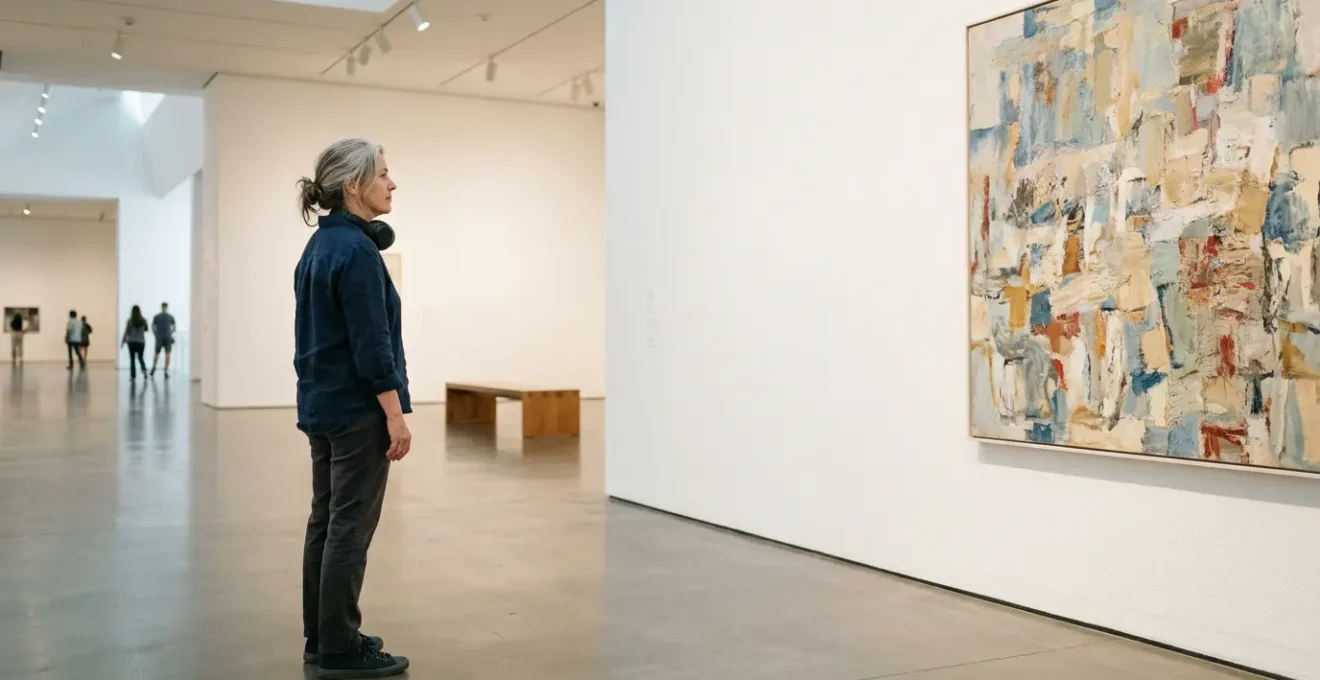
True neurodivergent accessibility in museums isn’t achieved by simply adding special events; it’s about fundamentally rethinking the sensory and cognitive experience of the space itself.
- Proactive management of sensory load (sound, light, crowds) is more effective than reactive quiet zones.
- Providing cognitive predictability through tools like Visual Stories reduces anxiety far more than a simple map.
Recommendation: Shift focus from creating separate, temporary accommodations to embedding inclusive design principles into your galleries’ core infrastructure and visitor information strategy.
For many museum access officers and families, the journey towards neurodivergent inclusion begins with a well-intentioned checklist: host a “quiet hour,” provide a map, and train staff to be understanding. These are important first steps. But what if the sudden, startling roar of a hand dryer in a restroom can undo all the calm you’ve worked to create? What if the real barrier isn’t just the crowd, but the unpredictable nature of the entire visit?
This guide moves beyond the basics. We will explore how to make your institution truly welcoming for visitors with diverse neurological profiles, including autism, ADHD, and sensory processing disorders. The common approach often focuses on temporary fixes or segregated experiences. However, a deeper, more impactful strategy lies in understanding the core principles of sensory load and cognitive predictability. It’s about seeing the museum environment through a different lens—one that is sensitive to subtle triggers that can cause distress or sensory overload.
Instead of just creating islands of calm, we will delve into how to manage the sensory experience of the entire museum journey, from the moment a visitor considers your venue online to the moment they leave. This involves examining everything from the quality of your lighting to the placement of seating. By shifting from a reactive model to a proactive, empathetic design philosophy, you can create a space that is not just “friendly” to neurodivergent visitors, but is fundamentally more comfortable, engaging, and restorative for everyone.
This article will guide you through practical, evidence-based strategies to transform your space. We’ll examine specific environmental factors, the psychological impact of design choices, and the tools that empower visitors by reducing anxiety and creating a sense of control.
Summary: Beyond the Quiet Hour: How to Make Museums Truly Accessible for Neurodivergent Audiences
- Why do visitors with autism need to know where the hand dryers are?
- How to manage a ‘Quiet Hour’ event without ruining the atmosphere?
- Easy Read Guides vs Audio Description: which serves a broader range of needs?
- The lighting mistake that makes your gallery unbearable for light-sensitive visitors
- How to write a ‘Visual Story’ that reduces anxiety before arrival?
- Families vs Solo Scholars: who needs more seating in gallery spaces?
- Why does viewing fractal patterns reduce cortisol levels in stressed visitors?
- Art to Provoke Introspection: Can Gallery Design Improve Mental Health?
Why do visitors with autism need to know where the hand dryers are?
The question isn’t just about hand dryers; it’s about understanding the concept of sensory load. For many neurodivergent individuals, particularly those with autism or sensory processing disorders, the world is experienced at a much higher intensity. An unexpected, loud noise isn’t merely an annoyance; it can be physically painful and trigger a state of sensory overload, derailing an entire visit. The sudden, high-pitched roar of a jet hand dryer in a reverberant restroom is a classic example of an intense, unpredictable auditory trigger.
Knowing the location of these potential triggers in advance allows a visitor or their family to mentally prepare or avoid them entirely. This is a core tenet of creating a sense of environmental control. It’s not about eliminating every possible sound, but about providing the information needed for visitors to navigate the space on their own terms. This single piece of information can be the difference between a successful, enjoyable outing and a distressing experience that ends prematurely.
Some institutions have taken proactive steps to mitigate this specific issue. The team at Cornwall’s Regimental Museum, for instance, noted that a simple but highly effective accommodation can be as straightforward as “turning off hand-dryers within the toilets” during quiet hours or upon request. This demonstrates a practical understanding that small environmental changes can have a disproportionately large positive impact on a visitor’s sensory well-being. The key is to identify these high-impact sensory “hotspots” and provide either mitigation or clear information.
How to manage a ‘Quiet Hour’ event without ruining the atmosphere?
The primary challenge of a ‘Quiet Hour’ or ‘Sensory-Friendly Morning’ is achieving a reduction in stimuli without creating a sterile or lifeless environment. The goal is to lower the sensory load, not to eliminate the museum’s soul. This balance is what can be termed atmospheric integrity. It requires a nuanced approach rather than simply turning everything down or off. Instead of darkness, think softer, more focused lighting. Instead of silence, think of reducing background hum and sudden noises while keeping essential soundscapes at a low, consistent volume.
This means carefully auditing the sensory environment. Are there looping videos that can be paused or have their volume significantly reduced? Can you turn off interactive screens that emit flashing lights and sounds? Limiting the number of visitors is the most common step, but the quality of the environment they enter is just as crucial. It’s about curating a calm, predictable, and welcoming space that still feels like a rich and engaging museum.
As the image above suggests, this is an act of careful preparation. It involves staff who understand how to thoughtfully adjust environmental controls to shape the visitor experience. A successful event provides a respite from the overwhelming sensory input of a typical day, allowing visitors to engage with the exhibits in a way that might otherwise be impossible.
Case Study: Smithsonian’s Morning at the Museum Program
The Smithsonian’s “Morning at the Museum” program is a prime example of a well-executed sensory-friendly event. Launched in 2011, it provides early access to various museums with significant environmental modifications. Lights are dimmed, sounds are kept at a low volume, and visitor numbers are strictly controlled. Crucially, the experience begins before the visit; families receive a rich packet of pre-visit materials, including social narratives (visual stories), sensory maps, and schedules. This comprehensive approach, designed in collaboration with people with autism and their families, addresses both the in-person sensory environment and the pre-visit need for cognitive predictability.
Easy Read Guides vs Audio Description: which serves a broader range of needs?
This question presents a false dichotomy; the most effective accessibility strategy recognizes that Easy Read Guides and Audio Descriptions serve different, though sometimes overlapping, needs. The real goal is to offer a suite of tools that cater to a wide range of visitors. Easy Read guides, with their use of simple language and clear visuals, are invaluable for visitors with learning disabilities, cognitive impairments like dementia, or even young children and non-native speakers. They prioritize cognitive accessibility, breaking down complex information into digestible parts.
Audio Description, conversely, is essential for visitors who are blind or have low vision, providing a verbal narrative of the visual world. However, it can also benefit visitors who find reading large blocks of text fatiguing or who learn better aurally. The choice is not about which is “better,” but about how to provide information in multiple formats to empower the visitor. The importance of this preparation cannot be overstated. A comprehensive survey found that an overwhelming 95% of respondents sought disabled access information before visiting a venue for the first time, primarily checking the venue’s website. This highlights a profound need for clear, multi-format advance information.
Modern technology offers a path to integrate these formats. Digital apps, for example, can house Easy Read text, audio files, sensory maps, and even interactive games in one place. They can be personalized, allowing a visitor to choose the format that works best for them. This moves the power from the institution to the individual, allowing them to curate their own accessible experience.
Case Study: Infiniteach’s Digital Museum Apps
The Chicago-based organization Infiniteach developed free apps for several major museums that serve as a powerful accessibility hub. These apps include social guides, visual schedules, and sensory maps highlighting quiet areas and potential trigger points. By consolidating these tools, they empower visitors, including those who are non-verbal, to find answers and navigate the museum independently, significantly reducing the social anxiety that can come from needing to ask staff for help.
The lighting mistake that makes your gallery unbearable for light-sensitive visitors
The most common lighting mistake in museums is not just the brightness, but the quality and consistency of the light. Many neurodivergent individuals, especially those on the autism spectrum, experience hypersensitivity to light. This isn’t just a preference for dimmer spaces; it can be a painful and disorienting physical reaction. The problem is often multifaceted, stemming from several easily overlooked factors.
One major culprit is the use of fluorescent lighting, which can have an imperceptible flicker that is highly disruptive to a sensitive nervous system. Another is high contrast: a gallery with intensely bright spotlights on artworks against very dark walls creates harsh transitions that are jarring and visually overwhelming. As noted by accessibility advocates, even well-intentioned “bright lights and intricate displays can be triggering” and lead to sensory overload. Glare from polished floors or uncovered windows can add another layer of visual noise.
A more inclusive approach to lighting focuses on creating a softer, more homogenous environment. This can be achieved by:
- Using full-spectrum, non-flickering light sources like modern LEDs.
- Diffusing light to reduce harsh shadows and glare.
- Ensuring gradual transitions in light levels between different galleries.
- Providing information on sensory maps about areas with particularly bright or flashing lights (e.g., video installations).
Providing sunglasses or visors can be a helpful reactive measure, but proactively designing the lighting scheme with sensory sensitivity in mind is a far more fundamental and effective solution. It creates a more comfortable viewing experience for everyone, not just those with acute light sensitivity.
How to write a ‘Visual Story’ that reduces anxiety before arrival?
A Visual Story (often called a Social Narrative) is one of the most powerful tools for enhancing cognitive predictability and reducing pre-visit anxiety. Its purpose is to walk a potential visitor through the entire museum experience, from arriving at the entrance to finding the restrooms and café, using simple language and clear photographs. It demystifies the unknown. For a person who finds new environments and social interactions stressful, knowing what to expect is not a luxury; it is the foundation of a successful visit.
As the charity Ambitious About Autism describes it, a good Visual Story should be a “one stop shop’ for what to expect when visiting your museum”, using clear language and photos. It should be written in a literal, first-person, or reassuring tone. Instead of saying, “You might see our friendly staff,” say, “You will see staff members wearing blue shirts. They are here to help. You can ask them a question if you want to.” Show photos of the ticketing desk, the entrance to the main gallery, the look of the restrooms, and even what a crowded space might look like.
The key is honesty and detail. If there are loud or dark areas, show them and explain them. This allows the visitor to be prepared, not surprised. The Museum of English Rural Life offers a best-practice example, having co-created its Visual Story with local autism groups and supplementing it with a Google Streetview tour, allowing for virtual navigation before ever leaving home. This multi-layered approach empowers visitors by giving them the information they need to feel in control of their upcoming experience.
Action Plan: Creating an Effective Visual Story
- Map the Journey: Walk through the entire visitor journey, from the street outside to the exit. Photograph every key decision point: entrance, ticket desk, cloakroom, elevators, stairs, gallery entrances, restrooms, and café.
- Gather Visuals: Take clear, well-lit photos of these locations. Include photos of staff members (with their permission). Show both empty and potentially crowded versions of a space if possible.
- Write Simple Text: For each photo, write a short, literal sentence describing what is happening or what the visitor should do. Use simple vocabulary and avoid metaphors or idioms. (e.g., “This is the ticket desk. You will show your ticket here.”)
- Include Sensory Information: Note areas that might be noisy, dark, bright, or have strong smells. (e.g., “This gallery has a video with sound. It might be loud.”)
- Publish and Promote: Make the Visual Story easy to find on your website’s accessibility page. Offer it as a downloadable PDF so families can review it offline before their visit.
Families vs Solo Scholars: who needs more seating in gallery spaces?
The question of who needs more seating—families or solo scholars—is best answered with: both, but for different reasons, and the need is often more critical for neurodivergent visitors and their families. A scholar may seek a bench for prolonged contemplation of an artwork. A family with young children may need a place to rest tired legs. However, for a neurodivergent visitor, seating is not just about rest; it’s a vital tool for self-regulation and managing sensory load.
A gallery space can be physically and cognitively demanding. The acts of standing, walking, navigating crowds, and processing information all consume energy. For someone whose brain is already working overtime to filter out excess sensory input, fatigue can set in quickly. Benches strategically placed within a gallery offer a chance to pause, decompress, and reset before becoming overwhelmed. The absence of seating can force a visitor to push past their limits, increasing the risk of a shutdown or meltdown.
Beyond simple benches, the most crucial form of seating is within a designated ‘Quiet Space’. This is more than just a bench in a hallway; it’s an area intentionally set apart from the main flow of traffic and high-stimuli exhibits. As the Tellus Museum in Georgia provides in their accessibility plan, having “Designated ‘Quiet Spaces’ located at the back of the theater and in the orientation theater” offers a sanctuary. These spaces give visitors an explicit license to step away without feeling like they are failing or leaving the museum. They are a fundamental component of providing environmental control and are arguably the most important seating you can offer.
Why does viewing fractal patterns reduce cortisol levels in stressed visitors?
The stress-reducing effect of viewing fractal patterns is a fascinating intersection of art, biology, and mathematics. Fractals are complex, self-repeating patterns that are ubiquitous in the natural world—from the branching of trees and the veins of a leaf to the structure of a snowflake or a coastline. Our brains have evolved over millennia to process these natural patterns with remarkable efficiency. This effortless processing is the key to their calming effect.
When we are stressed, our bodies produce the hormone cortisol. High levels of cortisol are associated with the “fight or flight” response. The visual system, however, has a built-in mechanism to counteract this. Research led by physicist Richard Taylor has found that viewing mid-range complexity fractals—the kind most often found in nature—induces a state of “effortless attention” or “wakeful relaxation” in the brain. This physiological response is measurable; his research demonstrated that participants recovered from stress 60% better when viewing images of these computer-generated fractal patterns.
This happens because our visual system is hardwired to fluently process these patterns, triggering a positive physiological cascade. The eye moves in a particular way, the brain releases calming neurochemicals, and the body’s stress response is dampened. In a museum context, this has profound implications. Art and artifacts that incorporate these natural, mid-range fractals—be it in the composition of a landscape painting, the design of a textile, or the form of a sculpture—are not just aesthetically pleasing. They can be inherently therapeutic, helping to lower a visitor’s physiological stress levels without them even being conscious of it. This is a core principle of biophilic design: leveraging our innate connection to nature to improve well-being.
Key Takeaways
- True accessibility goes beyond checklists and requires a deep understanding of the sensory and cognitive impact of the museum environment.
- Providing cognitive predictability through tools like Visual Stories is as important as managing the in-person sensory load.
- Inclusive design choices, such as thoughtful lighting and the integration of biophilic patterns, benefit all visitors by reducing stress and improving well-being.
Art to Provoke Introspection: Can Gallery Design Improve Mental Health?
The answer is a resounding yes. Gallery design can, and should, be a tool for improving mental health. By moving beyond a purely aesthetic or academic approach and embracing principles of therapeutic and biophilic design, museums can become spaces of respite and restoration. This is not about turning galleries into clinics, but about recognizing that the environment in which we experience art has a profound and measurable impact on our psychological and physiological state. The same way that a walk in nature can calm the mind, a well-designed gallery can lower stress and encourage positive introspection.
The science supports this. For instance, research on the Japanese practice of shinrin-yoku (forest bathing) shows that levels of the stress hormone cortisol were significantly lower in groups who spent time in forests compared to urban groups. This effect is largely attributed to the effortless processing of natural fractal patterns, gentle sounds, and organic forms. Museums can replicate these effects by thoughtfully incorporating natural materials (wood, stone), natural light, and artworks or designs that feature fractal patterns.
A holistically designed gallery considers the entire sensory journey. It provides a variety of spaces: some for focused social engagement, and others for quiet contemplation. It offers comfortable seating, clear navigation, and control over one’s own experience. This approach acknowledges that a visitor is not a disembodied pair of eyes, but a whole person whose well-being is affected by their surroundings.
Case Study: Maggie’s Centres and Biophilic Design
For a powerful example of this philosophy in action, we can look to Maggie’s Centres, specialized cancer care facilities in the UK. Designed by leading architects, these buildings are entirely structured around biophilic principles. They are filled with natural light, feature natural materials and fractal patterns, and provide constant views and access to gardens. As reported by experts in therapeutic design, the architecture itself is part of the healing process. Patients report reduced anxiety and improved emotional well-being, demonstrating that a thoughtfully designed environment can have measurable positive outcomes on mental health.
By embracing these principles of sensory management, cognitive predictability, and biophilic design, your institution can evolve. You can move from offering temporary accommodations to fostering a fundamentally inclusive environment where all visitors, regardless of their neurological makeup, feel not just tolerated, but truly welcome and able to connect with the art and stories you share.